Four Tiers of Listening in Contemporary DIY Music & Sound-making Practice Series – Part 2a
This blog represents the second in this series, the four (4) tiers of listening required in Contemporary DIY Music & Sound-making Practice. Please refer to my previous blog post for Part 1c, The 3 Primary Tiers of Active Listening in Contemporary DIY Music & Sound-making Practice (Page, 2015b).

(AE 2015a)
Active listening is a skill that separates the experienced musicians and audio engineers – particularly mix and mastering engineers – and aspiring musicians and engineers. Over the next six months I will cover theory and tasks for aspiring engineers to develop their critical & analytical listening skills. As part of that process, I introduce a task today that is a necessary step for the aspiring engineer to undertake in order to develop ones’ critical listening skills.
As I introduced in
The Four Tiers of Listening – Part 1a last month “Active listening, the ability to hear musically and sonically – technically, is an essential attribute of a music producer” (Page 2015a). Critical Listening (CL) is a learnt skill as a result of investing thousand’s of hours of listening critically to audio tracks. Aspiring audio engineers need to develop their ears, something that will require motivation and proactive discipline to commit to practicing on a regular basis. In order to separate ‘listening as a fan of music’ and ‘critical listening’, an aspiring practitioner needs to set aside time, scheduling a number of sessions per week to deliberately practice the discipline of critical listening. It is critical that this practice time is when your ears are fresh, when you will not be disturbed, and when you have access to some quality monitors and a DAW. Making such a commitment will be perhaps your most important decision in your development of one of the core audio engineering skills – your critical listening ability.
The first step is to choose a piece of music to analyse. My advice here is to choose a track you are already familiar with – that is, something that you like. This will assist you in the process of drilling down into the depths of the song, as you are already probably familiar with the features of the genre, and specifics of the song such as music characteristics and sonic qualities: even if you have not yet consciously set aside time to analyse the song in such a detailed manner.
In Critical Listening Part 1 I noted a song that was particularly influential on my development as a creative practitioner. Out of both respect, and I suppose a tribute to the significance of this song, I intend to use it as a reference track for one of my upcoming music productions.
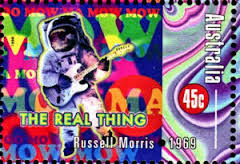 (Australia Post stamp 1998)
What is a reference track?
A reference track is a track you will use to ‘reference’ against throughout the process of the music production. In many ways, it could be considered a target for the production project; a target around which a building plan can be developed, an architectural plan for your song that has been designed, discussed, agreed and finally acted upon, and then evaluated at certain points in time along the process to confirm the target is likely to be achieved.

The reference track should therefore form an agreement as such between the artist and the producer of what the project objective is to be; what they are aiming at, and how the artist would like the final sound of their cultural production to be most similar to. And agreement between the artist and the production team.
The reference track is also most likely to play homage to the genre the artist is most aspiring to: who they are aspiring to sound like – stylistically, musically and sonically. What ‘reference’ track will your artist choose as their plan, their guide track for their production project? What sound do they desire for this specific production project?
Use of a reference track minimises the possibility of any issues later, avoiding a possible disagreement regarding the final product that was produced with difference of opinions between the artist and the producer of what the target was meant to be.
Why use a reference track?

The reference track specifies the genre, and outlines the specifics of the song such as the music characteristics and sonic qualities that will become the producer’s development plan for the particular production. If you do not have a reference track as starting point, a plan for your production as such, how does you producer know what the song should sound like overall? What mood should the song should evoke? What shape should the song should take? What musical qualities should be included? If you do not have such a plan, how does the producer know what instruments should be included? And if known, how does the producer know what the various instruments are required to sound? If you do not start with a reference track, how do you know what sonic qualities you as the producer will aim for in the production?

What are the elements of a reference track from an active listening perspective?
A ‘reference’ track is essentially a building plan, an architectural plan for your song, outlining the genre, and what musical and sonic qualities are most desired.
The genre will generally indicate a number of characteristics such as mood (happy, sad, reflective, anger); message (everyday life, relationship, political, spiritual); perspective (1st person, 3rd person narrative, 2nd person conversation, no lyric); likely instrumentation; likely musical structure; likely sonic qualities (hi-fi, lo-fi); social and cultural characteristics (era, target market demographic, cultural significance, para-musical intentions, aesthetic in context).
The musical characteristics include such as musical form; rhythm (tempo, time signature,stress, contra rhythms); harmony (key, harmonic progression, contra harmonies); melody (melodic curve, contra melodies); improvisation; instrumentation; timbre (colour of instruments used); arrangement; elements of interest (form, rhythmic, harmonic, melodic, improvisational,instrumentation or arrangement hooks) .
The sonic qualities of amplitude, timbre, stereo image, spectral, dynamics and time-domain.
Resources to analyse a reference track?
Analysing a reference track is an exercise in active listening. As mentioned, it will take time, practice and considerable dedication to learn to listen for the nuances of the cultural production – the genre, musical and the sonic qualities to a level of mastery.
Audio engineering is a craft and art that relies not only the auditory, but also on visual cues as well. Visual cues such as meters, spectrometers and vector scopes have traditionally all assisted the audio engineer to confirm what they are hearing with their ears. In today’s world of virtual digital technology, not only can we access a large range of meters and graphic scopes, but we can also rely on the additional visual cues of the tape (ie digital wave form in each track), and the virtual stave documents that can be generated from within the DAW. All of these tools can assist the aspiring engineer in the development of their critical listening skills.

(AE 2015b)
Self-learning task: schedule a critical listening period into your schedule over this coming weekend. Ensure you ears are going to be fresh, you will not be disturbed, and in a conducive listening environment with quality listening monitors. Choose a familiar song, and listen for clues regarding the genre, musical and the sonic qualities to a level that you have not practiced previously. Note down your findings. Repeat the exercise several days later, and not down your additional findings following the second critical listening session.
This Four Tiers of Listening in Contemporary DIY Music & Sound-making Practice Series continues with Part 2b,
Reference Track Analysis (2015c).[
March 2015].
References
AE 2015a Music note montage in the universe image courtesy of:
Angelic Exorcism (AE) Studio Projects Accessed 11th March 2015
AE 2015b Music note montage in the universe image courtesy of:
Angelic Exorcism (AE) Studio Projects Accessed 11th March 2015
Australia Post 1998 stamp image courtesy of
Australia Post.com. Accessed 4th October 2014
Onion image courtesy of:
Onion Layers Accessed 10th March 2015
Page, David L. 2015c. Analytical Listening, In Four Tiers of Listening in Contemporary DIY Music & Sound-making Practice Series – Part 2b blog post
. Accessed 10th March 2015
Page, David L. 2015b. The 3 Primary Tiers of Active Listening in Contemporary DIY Music & Sound-making Practice, In Four Tiers of Listening in Contemporary DIY Music & Sound-making Practice Series – Part 1c blog post
. Accessed 10th March, 2015
Page, David L. 2015a. Required Skills of a Contemporary Music & Sound-making Practitioner, In Four Tiers of Listening in Contemporary DIY Music & Sound-making Practice Series – Part 1a blog post
. Accessed 10th March, 2015
Pulsating image courtesy of:
Image Accessed 10th March, 2015
The Real Thing article courtesy of:
The Real Thing Accessed 10th March 2015
Bibliography
Corey, Jason. 2016. Audio production and critical listening:
Technical ear training: Taylor & Francis.
Everest, F Alton. 2007. Critical listening skills for audio professionals. Boston: Thomson Course Technology.
Hewitt, M. 2008. Music theory for computer musicians, Boston: Cengage Learning.
Hewitt, M. 2011. Harmony for computer musicians, Boston: Cengage Learning.
Moylan, William. 2007. Understanding and crafting the mix: the art of recording. 2nd ed. Boston: Focal Press.
Owsinski, Bobby. 2013. The mixing engineer’s handbook. 3rd ed. Boston: Cengage learning.
Pen, Ronald. 1992. Introduction to music. New York: McGraw-Hill.
Vella, Richard (with Andy Arthurs). 2003. Sounds in space, sounds in time: projects in listening, improvising and composing. 2nd ed. London: Boosey & Hawkes.
– ©David L Page 11/03/2015
– updated ©David L Page 12/03/2015
– Updated ©David L Page 10/02/2024
Copyright: No aspect of the content of this blog or blog site is to be reprinted or used within any practice without strict permission directly from David L Page.
SaveSave
SaveSave