Doctoral Research Study – Part 2k

My journey continues….

~DLP Pro Image Fun 5b small.20141020

(Page 2014)
This blog is a continuation of a series. See here (Page 2015a) for the previous blog.

Year 2015: 2nd Observation Part k

As part of the professional doctorate program I had entered, we were inducted into the world of academic research study. Whilst I was a relative open book in terms of my quest for new knowledge, I found the requirements of being fast-tracked from a position of practitioner into the world of academia at a doctoral level, overwhelming. The level of growth required was enormous.
As part of our program, we were being led to examine three (3) aspects of our practice:
  • the field and discipline of practice
  • the site of our practice
  • and me as a practitioner

Bordering my music-making practice

Over the preceding ten (10) blogs – Parts 2a through 2i –  I have developed my knowledge in the fields and disciplines of contemporary music-making, and as a result been able to border – and define – my music-making practice.

I have looked in depth at:
a.     Historical development of the industry from the 1830’s to the current era. Recording industry – from the invention of the 1st recording, microphones, corporate studios, progressing to large format recording studios
  • Music Production
  • Digital Technology – Consoles
  • Digital Technology – Organs, Synthesisers, Samplers
  • Project Studio
  • Consoles – DAWs and, Digital Virtual Instruments – Organs, Synthesisers, Sampler
  • Portable Studio
b. Industry standards of practice – commercial
  • Industry standards of practice – technical
  • Industry standards of practice – creative, aesthetic or affective
  • Industry standards of practice – soft skills
c. Defining DIY
d. Social, Cultural and Music-making practice Related
e. Changing Face of Music Production
f. The traditional definition of Music Producer
g. A new discipline of music-making emerges
h. The contemporary music-making practice
i. The contemporary music-making practitioner
Following this historical investigation, I examined me as a practitioner, outlining:
a. My autobiography as a music-maker
b. What form my practice currently takes
c. Broadening definition of music-making practice
d. Changing motives of practice
I then outlined my specific site/s:
e. My sites: my DIY Studio Production setup/s.
I concluded the bordering – defining – my music-making practice with:
f. Defining the Music Production process
g. Defining a holistic DIY Music Production process
In the following three (3) blogs, I outlined the Aim of Research Study, listed the existing theory and research studies had already been completed within the industry, field and disciplines; and finished outlining the significance of this research study for the industry, field and discipline.

A holistic view of a higher degree research study

By the end of 2015, my research study journey was well under way. As outlined in the preceding sections, I had begun my investigations across six (6) areas (see figure I below). I had gained clarity regarding the Industry and field of my practice, and standards of practice; my autobiography and events in my life that may have influenced who I am today. I had started to examine my practice, and identify the elements of praxis. I investigated the field and discipline theory, identified the lens that I viewed the world; and developed an appropriate research methodological approach. 
 Figure I – Preparing for Research Study (Page 2015b)
In doing so, I developed my research study brief. I gained clarity as to how the research study was situated, and the scope of the project. Additionally, I was clear on the potential benefits – the significance of this research study could have – in terms of the wider industry, various fields and disciplines. I did not assume for one moment that I was an expert in any of the areas. This twelve (12) month entree had provided me enough information to understand I was a novice academic research practitioner. Such research had provided me an opportunity to start to frame my music-making practice, in ways I had not previously considered.
My eyes were starting to open re who I, David L Page was in terms of my contemporary music-making practitioner identity. I had looked at a number of events in my life that had in some way influence over my approach to music-making. I had always known I had vast musical influences, but it was only in putting them together into a mind-map, that I comprehended the vastness of these, and could begin to make additional linkages between what may have seemed to be contrasting music styles. In doing this, I could better understand the diversity of my music-making practice, and why I was perhaps so enticed to so many corners of music-making practice. In re-exploring such diversity as outlined in the previous blogs, I recognised the need for me to develop how I defined my music-making. I accept now that my definition of music-making necessarily needs to include a broader term that is inclusive of everyday music-making engagement – that of musicking.
At the end of 2015, despite my twelve (12) months of intensive investigation and discovery of new knowledge, I accepted that I was in many ways, only just beginning my formal academic journey. 
onion-layers
This blog series is planned to continue next month with Doctoral Research Study – Part 3 (Page 2015c). It is intended for this blog series to continue on a regular basis as I progress through my doctoral research project.
References
Onion image courtesy of: Onion Layers Accessed 15th December, 2014
Page, David L. 2017 2nd Observation image courtesy of David L Page Created 10th June, 2017
Page, David L. 2015c. Doctoral Research Study – Part 3 Accessed 29th April, 2015
Page, David L. 2015b. Preparing for Research Study image courtesy of David L Page Created 19th November, 2015
Page, David L. 2015a. Doctoral Research Study – Part 2j Accessed 15th April, 2015
Page, David L. 2014 image courtesy of David L Page Created 15th December, 2014
– @David L Page 20/11/2015
– updated @David L Page 01/12/2015
– updated @David L Page 10/06/2017
Copyright: No aspect of the content of this blog or blog site is to be reprinted or used within any practice without strict permission directly from David L Page.

SaveSaveSaveSaveSaveSave

SaveSave

SaveSave

SaveSave

SaveSave

SaveSave

SaveSave

SaveSave

SaveSaveSaveSave

SaveSaveSaveSave

SaveSave

SaveSave

SaveSave

SaveSave

SaveSave

SaveSaveSaveSaveSaveSaveSaveSaveSaveSaveSaveSave

SaveSave

Doctoral Research Study – Part 2j

Design of Research Study

qut-logo

This blog is a continuation of a series. See here (Page 2015a) for the previous blog.

Significance of this research study for the industry, field and discipline

The significance of this research can be categorised into three areas: a blended philosophical approach additional to the current academic literature; the expansion of research methodologies usually applied in this area; and the development of a new music-making praxis, inclusive of the practitioner self.
The combination of my ontological perspective, epistemological approach and multi-methods research study, will add a unique perspective to the literature on music and sound, cultural sociology, phenomenology, arts’ literacy, self and narrative. This empirical research study will be conducted through my experiential phenomenological lens (Grace and Ajjawi 2010, 198), using qualitative methodologies of: practice-led research, reflective practice, critical thinking, reflexive practice, ethnography and evocative auto-ethnography over the two projects. No current studies seek to blend these three into the one paradigm.
As mentioned, Bennett (2000) and Frith (1996) discuss music and sound, cultural sociology, and narrative for example, but from a different ontological perspective, disregarding arts’ literacy and self. Others sharing my ontological perspective such as Griffiths (2010) and Ryan (2014) tend to discuss areas of my intended phenomenology – arts’ literacy, self and narrative – but disregard music and sound, as well as the specificities of cultural sociology. Others such as Bartleet (2009) and Davidson (2015) both cover practice-based research regarding their music-making, but offer more of an insight into the auto-ethnographic research aspect of the study, rather than a specific focus on their music-making (Dogantan-Dack 2015).
There is no literature that I have found which takes a comprehensive look at music-making practice across multiple stages of practice, from an experiential phenomenological lens, as a practice-led auto-ethnographic research study. It is this differentiation that will provide my intended research study significance in its perspective.
This multi-tiered examination will represent a significant departure from current discussion of music-making practice, developing praxis of contemporary music-making practice. As outlined in the previous section, functional music production texts generally propose very narrow views of practice. My research will serve other industry practitioners by investigating the relationships of these elements of practice. I will also expand this discussion by considering music making practitioners’ motives, offering a further unique insight to the most frequently discussed motive – technical practice. Other motive orientations such as aesthetics or creativity – with the exception of Moylan (2007) – are seldom discussed. Most significantly, I will be including an examination of the self in context, to provide a greater understanding of, and develop a broader view of music praxis. . This study will innovate through refocusing success in terms of bringing the social self into the industry literature and bringing the industry into the identity literature. I had considered the completion of interviews at the beginning of Doctoral Research Study Project 2 to provide a source of empirical data about contemporary music practitioners, in terms of their view of self, their motivations and the relationship of their choices of technology, music style, workflow and creative location. The data collected throughout the two projects will illuminate a more holistic and inclusive approach to practitioner-based research, and stimulate discussion amongst fellow researchers, field and discipline practitioners and creative industry educators.
As an examination of music-making practice and self, the research methodologies not only focus on evocative auto-ethnography but also draw on critical reflection and reflexive practice principles.   As Rescher notes:
“not only is knowledge indispensably useful for our practice but the reverse is the case as well. Knowledge development is itself a practice and various practical processes and perspectives are correspondingly useful—or even necessary—to the way in which we go about constituting and validating our knowledge” (2003, xvii).
It is one of my objectives to showcase the opportunities and challenges of such a qualitative study, particularly within a creative arts’ discipline. In this way my research study will contribute to transforming existing epistemologies of practice. I would expect to contribute in terms of the extensive empirical data that will be gathered throughout my research study, in terms of music-making practice as an expression of the self, allowing a greater understanding of the self, as the creative practitioner. I would also expect to contribute an increased understanding of contemporary music-making practice in the creation of EP’s. This will include a guide for aspiring practitioners in best practice.
Lastly, I would expect my research study to contribute in terms of higher order behaviours in a taxonomy of reflective practice. As a multi-method practice-led approach, I will draw on and apply multiple approaches of reflective practice across the four-year part-time research study, in both Project 1 and 2. There will be extensive empirical data gathered as a matter of process, with commentary and reflection regarding the opportunities and challenges of such approaches including that of: Archer (2007, 2010), Ryan (2014), Griffith (2010), Brookfield (1995), and Finlay (2008), within contemporary music-making practice. Of particular note will be data elicited regarding a creative practitioner performing the dual role of both practitioner and researcher, and the implications this has on the music-making practice workflow.
The findings in this research study will also provide utility across disciplines. In a world with a developing DIY intent, of developing practice across all disciplines, I trust my research study will broaden discussion in the field of social and cultural studies by providing both data and narrative for dual primary role-based (subject and researcher) formal research studies.
onion-layers
This blog series is planned to continue next month with Doctoral Research Study – Part 2k (Page 2015b). It is intended for this blog series to continue on a regular basis as I progress through my doctoral research project.
References
Archer, Margaret S. 2010. Conversations about reflexivity, Ontological Explorations. New York: Routledge.
Archer, Margaret S. 2007. Making our way through the world: human reflexivity and social mobility. Cambridge: Cambridge University Press.
Bartleet, Brydie-Leigh. 2009. “Behind the baton: Exploring autoethnographic writing in a musical context.” Journal of Contemporary Ethnography 38 (6): 713-733.
Bennett, Andy. 2000. Popular music and youth culture: music, identity and place. New York: Palgrave.
Brookfield, Stephen D. 1995. Becoming a critically reflective teacher. San Francisco: Jossey Bass.
Davidson, Jane W. 2015. “Practice-based music research: lessons from a researcher’s personal history.” In Artistic Practice as research in music: theory, criticism, practice, edited by Mine Dogantan-Dack, 93-106. Surrey: Ashgate Publishing, Ltd.
Dogantan-Dack, Mine (Ed). 2015. Artistic Practice as research in music: theory, criticism, practice, edited by Graham Welch, Adam Ockelford and Ian Cross, SEMPRE Studies in The Psychology of Music. Surrey: Ashgate Publishing, Ltd.
Finlay, Linda. 2008. Reflecting on reflective practice. Practice-based Professional Learning Centre paper 52 29 (August 12th, 2015). www.open.ac.uk/pbpl.
Frith, Simon. 1996. “Music and identity.” Questions of cultural identity: 108-27.
Grace, S and R Ajjawi. 2010. Phenomenological research: Understanding human phenomena. Researcing practice: A discussion on qualitative methodologies. Rotterdam: Sense.
Griffiths, Morweena. 2010. Research and the self. In The Routledge companion to research in the arts, edited by M Biggs and H Karlsson, 167-185. London: Routledge.
Moylan, William. 2007. The art of recording: the creative resources of music production and audio. 2nd ed. Boston: Focal Press.
Onion image courtesy of: Onion Layers Accessed 15th December, 2014
Page, David L. 2015b. Doctoral Research Study – Part 2k.  Accessed 20th November, 2015
Page, David L. 2015a. Doctoral Research Study – Part 2i  Accessed 20th October, 2015
Page, David L. 2014 image courtesy of David L Page  Created 15th December, 2014
QUT image courtesy of:  Queensland University of Technology   Accessed 4th September 2015
Rescher, Nicholas. 2003. Epistemology: an introduction to the theory of knowledge, edited by George R Lucas Jr, SUNY series in Philosophy. New York: SUNY Press.
Ryan, Mary Elizabeth. 2014. Reflective practice in the arts. In Literacy in the Arts, edited by G Barton, 77-90. London: Springer.
– ©David L Page 10/11/2015
– updated ©David L Page 20/11/2015
– updated ©David L Page 10/06/2016
Copyright: No aspect of the content of this blog or blog site is to be reprinted or used within any practice without strict permission directly from David L Page.

SaveSave

SaveSave

SaveSaveSaveSave

SaveSave

SaveSave

SaveSave

SaveSave

SaveSave

SaveSave

SaveSave

SaveSave

Doctoral Research Study – Part 2i

Design of Research Study

qut-logo

This blog is a continuation of a series. See here (Page 2015a) for the previous blog.

Existing theory and research studies had already been completed within the industry, field and disciplines

As part of my preparing for my research study, I investigated a broad range of literature – industry-based text-books, and academic-based peer-reviewed literature. A variety of these resources have been informative to my intended research study. These include:
Industry-based text-books focusing specifically and comprehensively on one aspect of the music-making process in detail. These resources predominantly look at the technical elements of music-making practice, such as composing within a DAW. Examples are:
  • Gilraith’s (2010) “The Guide To MIDI Orchestration“;
  • Edstrom’s (2006) “Musicianship in the digital age” ; and
  • Dodge and Jerses’ (1997) “Computer music: synthesis, composition and performance”.
There were also a range of peer-reviewed articles outlining their research studies. Whilst I found these studies useful in terms of highlighting considerations of the compositional process within a digital virtual environment (DAW), none took a holistic perspective of the music-making process. Little attempt was made in any of these to develop music-making praxis; nor to consider the self or practitioner self as worthy elements of practice.
  • Nevels’ 2012 study, as summarised in “Using Music software in the Compositional process: a case study of electronic music composition”;
  • Chen’s 2012 Hong Kong-based “A Pilot Study Mapping Students’ Composing Strategies – Implications for Teaching Computer-Assisted Composition”;
  • Folkestad et al’s 1998 study, as summarized in “Compositional strategies in computer-based music-making”; and
  • Marrington’s 2011 study as summarised in “Experiencing Musical Composition In The DAW: The Software Interface As Mediator Of The Musical Idea”.
A number of other peer-reviewed articles looked at the studio more from a holistic perspective, but had a number of limitations of perspective; namely the lack of attempt to develop music-making praxis; nor to consider the self or practitioner self as worthy elements of practice. For example:
  • Bell’s 2014 study, as summarized in “Trial-by-fire: A case study of the musician–engineer hybrid role in the home studio”;
  • a number of studies contained within Frith and Zagorski-Thomas’s 2012 “The Art of Record Production: An Introductory Reader for a New Academic Field”;
I read with interest the title of Thompson and Lashua’s “Getting it on Record: Issues and Strategies for Ethnographic Practice in Recording Studios”, only to realise in the abstract that they focussed on a very narrow view of production. Their upfront claim of “(g)iven that recording studios are, first and foremost, concerned with documenting musician’s performances” signalled to me that their view of production was only to focus on forms of musical style where this was the case. By definition, they would exclude the majority of musical styles where the recording studio was used as an instrument, with the producer acting as composer [1]. However, from a methodology point of view, Thompson and Lashua’s article – along with some of the others mentioned, do outline some useful considerations for my research study.
I continued my investigation broadening my scope. Peer-reviewed books and articles such as Bennett (2000) and Frith (1996) discuss music and sound, cultural sociology, and narrative. These were useful – interesting and informative – in terms of my research and developing understanding of specific sociological concepts. However, they have limited use in terms of my particular research study given their differing ontological perspective relative to my experiential phenomenological lens. Those studies exclude any engagement or discussion of the elements of motive and self.
Other peer-reviewed research studies such as De Carvalho’s (2012) perspective in her article “The Discourse of Home Recording” do consider the self and identity. However, they are similarly limited due to De Carvalho’s ontological lens of a radical structuralist. Viewing the home music-making in terms of power relationships (Burrell and Morgan 1992), whilst an interesting point of view in understanding the dynamics of the broader industry – and perhaps even how I as a practitioners has arrived at this point of access – , has similarly limited relevance for me trying to understand the process of my practice, and develop music-making praxis.
Webber’s (2009) study “In music and in life: confronting the self through auto-ethnography” is perhaps the closest to my proposed study. Webber is a music-making practitioner, who also drew on an auto-ethnographic methodology, and focused on self. However, that study differs – subtlety – to my proposed study, in two ways:
  • Webber was diagnosed with the condition Asperger syndrone just prior to commencing his study, and therefore was motivated to use his study to understand himself, and how specifically that condition informed his music-making practice. I have no such known condition, and am motivated by a need to examine process in order to engage with my music-making practice more effectively;
  • Webber’s music-making practice is composition for theatre, and therefore quite a specialist skill relative to my broader definition and application of music-making as previously outlined.
Irrespective of these differences, there is much I believe I can learn from his study, and as a result, I gained Dr Webber’s agreement to be an Industry Mentor on my research study.
onion-layers
Footnote
[1] In later blogs I will discuss approaches to production, with includes (of many) two quite distinct approaches. As outlined in Moorefield’s 2005 “The Producer as Composer: Shaping the Sounds of Popular Music”. Organic style of music such as classical, jazz and roots styles of music attempt to capture the performance as accurately as possible – as Thompson and Lashua infer – in order to maintain the integrity of the art and craft. However, others styles of music such as pop (and its many commercially motivated sub-genre derivatives), hip-hop, rap and electronic dance music styles of music are – in this era – more likely to be produced with the intention that the producer will embellish the artist’s performance, often beyond recognition of the original tracked artist’s performance. Both approaches are valid, but are prescribed by the style of music one is endeavouring to produce. Given my broad approach to production, Thompson and Lashua’s article is severely limiting, effectively excluding a number of musical styles I am likely to focus on.
onion-layers
This blog series is planned to continue next month with Doctoral Research Study – Part 2j (Page 2015b).  It is intended for this blog series to continue on a regular basis as I progress through my doctoral research project.
References
Bell, Adam Patrick. 2014. “Trial-by-fire: A case study of the musician–engineer hybrid role in the home studio.” Journal of Music, Technology & Education 7 (3): 295-312.
Bennett, Andy. 2000. Popular music and youth culture: music, identity and place. New York: Palgrave.
Burrell, Gibson and Gareth Morgan. 1992. Sociological paradigms and organisational analysis: elements of the sociology of corporate life. Aldershot, Hants: Ashgate.
Chen, Jason Chi Wai. 2012. “A pilot study mapping students’ composing strategies: Implications for teaching computer-assisted composition.” Research Studies in Music Education 34 (2): 157-171.
De Carvalho, Alice Tomaz. 2012. The discourse of home recording: authority of pros and the sovereignty of big studios. Journal of the Art of Record Production 7.
Dodge, Charles and Thomas A Jerse. 1997. Computer music: synthesis, composition and performance. 2nd ed. Melbourne: Macmillan Library Reference.
Edstrom, Brent. 2006. Musicianship in the digital age. Boston: Thompson Course Technology.
Folkestad, Göran, David J Hargreaves and Berner Lindström. 1998. “Compositional strategies in computer-based music-making.” British Journal of Music Education 15 (01): 83-97.
Frith, Simon. 1996. “Music and identity.” Questions of cultural identity: 108-27.
Frith, Simon and Simon Zagorski-Thomas. 2012. The art of record production: an introductory reader for a new academic field: Ashgate Publishing, Ltd.
Marrington, Mark. 2011. “Experiencing musical composition in the DAW: the software interface as mediator of the musical idea.” Journal on the Art of Record Production 1.
Moorefield, Virgil. 2005. The producer as composer: shaping the sounds of popular music. London: MIT Press.
Nevels, Daniel L. 2013. “Using music software in the compositional process: a case study of electronic music composition.” Journal of Music, Technology and Education 5 (3): 257-271. doi: 10.1386/jmte.5.3.257_1.
Onion image courtesy of: Onion Layers Accessed 15th December, 2014
Page, David L. 2015b. Doctoral Research Study – Part 2j.  Accessed 20th October, 2015
Page, David L. 2015a. Doctoral Research Study – Part 2h  Accessed 5th September, 2015
Page, David L. 2014 image courtesy of David L Page  Created 15th December, 2014
QUT image courtesy of:  Queensland University of Technology   Accessed 4th September 2015
Thompson, Paul and Brett Lashua. 2014. “Getting it on record issues and strategies for ethnographic practice in recording studios.” Journal of Contemporary Ethnography: 0891241614530158.
Webber, Colin. 2009. “In music and in life: confronting the self through auto-ethnography.” In Music ethnographies: making auto-ethnography sing – making music personal, edited by Brydie-Leigh Bartlett and Carolyn Ellis, 261-273. Bowen Hills: Australian Academic Press.
– ©David L Page 20/10/2015
– updated ©David L Page 20/11/2015
– updated ©David L Page 10/06/2016
Copyright: No aspect of the content of this blog or blog site is to be reprinted or used within any practice without strict permission directly from David L Page.

SaveSave

SaveSave

SaveSaveSaveSave

SaveSave

SaveSave

SaveSave

SaveSave

SaveSave

SaveSave

SaveSaveSaveSave

SaveSave

SaveSave

Reflective Practitioner – Part 8

This blog is a continuation of a series. See here (Page 2015a) for the previous blog.

Pausing for a moment of reflection…..

Music-making

Music-making is not a choice for me; it is a necessity. I have made music over many decades, in any different forms. I have practiced music for over four decades in multiple social and cultural contexts, and in significantly contrasting creative locations, such as a church choir singer, musician, songwriter, band member, teacher, project manager, engineer, solo artist, musician for hire, producer, and most recently an electronic music producer and educator. Over this time, I have engaged a (vast) range of technologies, using countless variations of workflow. Having commenced my music-making practice with acoustic and analogue technology, I then progressed to digital technologies, and finally to digital virtual technologies. I found moving to digital and digital virtual technologies in recent decades, difficult. The vastly different technologies and associated workflows that lend themselves to creative locations and music styles impacted my music-making practice, hindering the realisation of my creative productions, my EPs.
~DLP Pro Image Fun 5b small.20141020
(2014)

Self

Observing new music production technologies and associated workflows impacted my music-making practice and the realisation of my creative productions. I observed this phenomenon had an effect on the concept of my self, which then in turn had an effect on my motive to practice music. Ryan considers it essential for a creative arts practitioner to look deeper into self: “Self-awareness and identity are significant both in the study of the arts and in becoming an artist, as aesthetic inquiry and performance are constituted by subjective self-expression in relation to objective conditions” (Ryan 2014,77).
Music is acknowledged as being particularly important in terms of the development of the self: Hargreaves et al (2002) discuss how music facilitates self expression and development, allowing the self to transform, and construct new identities. Frith (1996,124) argues that “Music constructs our sense of identity through the direct experiences it offers of the body, time and sociability, experiences which enable us to place ourselves in imaginative cultural narratives.” While Bennett (2000, ii) concludes that “music is produced and consumed by young people in ways that both inform their sense of self and also serve to construct the social world in which their identities operate”. For many decades I have asked questions of my self, though always in isolation of my music practice. Velosa and Carvalho’s (2013) “Music Composition as a way of learning: emotions and the situated self” and Taylor’s (2008) “Pink Noise: Queer Identity and Musical Performance in a local context” both stressed the importance of situating the self within the context of interest, in order to study it. There are a number of studies where this is done, from example Taylor’s (2012) and Peraino’s (2006) studies of gender. However, whilst an increasing number of music practice discussions include the element of self, however, few exist outside of academic-based articles or texts (DeNora 1999; MacDonald et al 2002; DeNora 2005; Peraino 2006; Taylor 2012).
During my Doctoral Research Project 1, I will examine the praxis of music-making practice (see figure I below): how the creation of EP’s are negotiated and articulated through: self, motive, technology, music style, workflow and the creative location. I will critically reflect on how my music practice can be considered a performance of the self, and how this performance is governed by motive, and mediated through technology, creative location, style and processes of workflow. The ways that I achieve such integration represent personal expressions and negotiations of the self through the technology and within my sites of practice, the particular music style, and my workflow of DIY music practice (Emmerson 2007).
dlp-music-praxis-v3-20151203-p1
Figure I – Praxis version 3 (Page 2015b)
In terms of my practitioner self, the following specific questions require consideration:
  • what are my motivations to practice music?
  • how does my music practice contribute to the concept of my self?
  • how does my self-concept shape my music practice?

Dual Roles

Given my dual primary role for my research study of both the subject as music practitioner and the researcher, and the necessity to include the perspective of me as practitioner self, I have selected the mixed-method qualitative methodologies of: practice-led research, evocative auto-ethnography, reflective practice, critical thinking and reflexive practice (see figure II below).

my-research-study-project_3-points_no-self-p0

Figure II – Research Study Approach (Page 2015c)
This blog series is planned to continue next month with Doctoral Research Study – Part 2i (Page 2015d). It is intended for this blog series to continue on a regular basis as I progress through my doctoral research project.
References
Bennett, Andy. 2000. Popular music and youth culture: music, identity and place. New York: Palgrave.
DeNora, Tia. 1999. Music as a technology of the self. Poetics 27 (1): 31-56.
DeNora, Tia. 2005. The pebble in the pond: Musicing, therapy, community. Nordic Journal of Music Therapy 14 (1): 57-66.
Emmerson, Simon. 2007. Living electronic music. Hampshire, UK: Ashgate Publishing, Ltd.
Frith, Simon. 1992. The industrialization of popular music. Popular Music and Communication 2: 49-74.
Hargreaves, DJ, D Miell and RAR MacDonald. 2002. What are musical identities, and why are they important? In Musical Identities, edited by RAR MacDonald, DJ Hargreaves and D Miell, 1-20. Oxford Oxford University Press.
MacDonald, Raymond A. R., David J. Hargreaves and Dorothy Miell. 2002. Musical identities. Oxford: Oxford University Press..
Page, David L. 2015d. Doctoral Research Study – Part 2i Accessed 20th October, 2015
Page, David L. 2015c. Figure II – Research Study Approach image courtesy of David L Page in QUT KKP603 Project Development in the Creative Industries submission draft Accessed 4th October, 2015.
Page, David L. 2015b. Figure I – Praxis version 3 image courtesy of David L Page in QUT KKP603 Project Development in the Creative Industries submission draft Accessed 4th October, 2015.
Page, David L. 2015a. Reflective Practitioner – Part 7 Accessed 15th September, 2015.
Page, David L. 2014 image courtesy of David L Page Created 15th December, 2014
Ryan, Mary Elizabeth. 2014. Reflective practice in the arts. In Literacy in the Arts, edited by G Barton, 77-90. London: Springer.
Peraino, Judith Ann. 2006. Listening to the sirens: musical technologies of queer identity from Homer to Hedwig. Berkeley: University of California Press.
Taylor, Jodie. 2012. Playing it queer: popular music, identity and queer world-making. Bern: Peter Lang.
Taylor, Jodie. 2008. Pink Noise: Queer identity and musical performance in a local context. Paper presented at the Music on the Edge: selected refereed papers from the 2007 IASPM-ANZ Conference, Dunedin, New Zealand. jaspm.org..au.
Veloso, Ana Luísa and Sara Carvalho. 2013. Music composition as a way of learning: emotions and the situated self.  In Musical Creativity: Insights from Music Education Research: Insights from Music Education Research: 73
– ©David L Page 06/10/2015
-updated ©David L Page 20/10/2015
Copyright: No aspect of the content of this blog or blog site is to be reprinted or used within any practice without strict permission directly from David L Page.

SaveSave

SaveSave

SaveSave

SaveSave

SaveSave

SaveSave

Reflective Practitioner – Part 7

This blog is a continuation of a series. See here (Page 2015a) for the previous blog.

Reflecting..

~DL with Gretsch + C414.20141006.P21
(2015b)
To say that music is an integral part of my life I believe understates the importance of it for me. Music has been the one constant in my life, central to my being, accompanying me wherever I am, irrespective of whether I am physically playing, listening or internally listening via memory. Irrespective of the location, circumstance or event, music is within me. Music practice is not a choice for me; it is a necessity. I have practiced music for over four decades in multiple social and cultural contexts, and in significantly contrasting creative locations, such as a church choir singer, musician, songwriter, teacher, band member, producer, commercial songwriter, manager, solo artist, musician for hire, band leader, stage manager, artist coach, engineer (live and studio), and most recently an Electronic Music Producer and educator. I have engaged a (vast) range of technologies, using countless variations of workflow. I continue to practice music on a daily basis, engaging physical instruments, digital virtual technologies, or in the research, analysis, or listening to music styles. I embrace a broad definition of music practice (Small 1998; DeNora 2000; Wallis 2001; DeNora 2005; Hesmondhalgh 2013), with my practice currently including the preparation for and teaching audio at a higher education institute, a variety of contracted music projects from tracking to mixing, and examining my music practice through this doctoral research study.
Given my current motives for practice are not volume sales-based, I am averse to categorising my music practice as professional practice. In looking for an alternative classification to define my music practice, I considered the classifications for my practice of: professional, semi-professional, amateur or hobbyist (Rogers 2013). Could it be semi-professional, as I earn multiple small income streams from various forms of music practice? Or is it amateur, referring to my current status as a music producer where I am earning minimal income at present because of my current pursuits of creative industry education, and full-time doctoral studies? Referencing Kuznetson and Paulos’s article, I am reluctant to assume the title of expert for my music practice, as I consider myself a generalist across a breadth of skills and experiences. (Kuznetson and Paulos 2010, 295). What I do however accept is who I am: highly motivated, possessing an impassioned commitment to my practice, with a very high level of focus on developing my knowledge, skill level and technology. After four decades of music practice, I seek to learn on a daily basis: newly released creative technologies, applying them in a variety of creative locations; familiarising my self with new music styles; developing new practice workflows; better understanding my motives, and my self. I am engaging this doctoral research study to investigate my practice, in order to develop greater understanding and workflows. I therefore am of the opinion I exhibit qualities and attributes that reflect an attitude of professionalism.
Despite my four decades of practice, I have my eyes very much on the future. I still have a lifetime of music goals still to realise: songs to write and arrange; sonic textures to explore; creative productions to develop; and engage with both my peers and the public to a far greater degree than I have to date. I am hopeful of continuing my journey with music as an integral part of my life, core to my being, accompanying me wherever I am. For these reasons, not with standing my experience, knowledge and skills accumulated and developed to date, both within the field and discipline of music and sound, and all other experiences in life, I also classify my self as an aspiring music practitioner.
I commenced my music practice with acoustic and analogue technology, developing a workflow that reinforced my musical literacy, instrumental skills and personal taste in music. However, moving from acoustic to digital and digital virtual technologies in recent decades, I have observed the vastly different technologies and associated workflows that lend themselves to creative locations and music styles. This has impacted my music practice, hindering the realisation of my creative productions: my EPs. Whilst I have found my self at various times asking a number of questions in isolation, I now find myself seeing them as connected issues within the more global problem I propose for my doctoral research investigation: ‘Contemporary DIY music practice and the practitioner self’.
This blog series is planned to continue next month with Reflective Practitioner – Part 8 (Page 2015c). It is intended for this blog series to continue on a regular basis as I progress through my doctoral research project.
References
DeNora, Tia. 2000. Music in everyday life. Cambridge: Cambridge University Press.
DeNora, Tia. 2005. The pebble in the pond: Musicing, therapy, community. Nordic Journal of Music Therapy 14 (1): 57-66.
Hesmondhalgh, David. 2013. Why music matters. Vol. 1. West Sussex, UK: Wiley Blackwell.
Kuznetsov, Stacey and Eric Paulos. 2010. Rise of the expert amateur: DIY projects, communities, and cultures. In Proceedings of the 6th Nordic Conference on Human-Computer Interaction: Extending Boundaries, Reykjavik, Iceland, October 16-20, 2010, edited, 295-304. http://dl.acm.org/citation.cfm?id=1868914&picked=prox: ACM.
Page, David L. 2015c. Reflective Practitioner – Part 8. Accessed 6th October, 2015.
Page, David L. 2015b. image courtesy of David L Page Created 15th September, 2015
Page, David L. 2015a. Doctoral Research  Study – Part 2h. Accessed 15th September, 2015.
Page, David L. 2014 image courtesy of David L Page Created 15th December, 2014
Rogers, I. 2013. The hobbyist majority and the mainstream fringe: the pathways of independent music-making in Brisbane, Australia. In Redefining mainstream popular music, edited by Sarah Baker, Andy Bennett and Jodie Taylor, 162-173. New York: Routledge.
Small, Christopher. 1998. Musicking: the meanings of performing and listening. Hanover: University Press of New England.
Wallis, R Dr. 2001. Best practice cases in the music industry and their relevance for government policies in developing countries. Paper presented at the United Conference on Trade and Development, Brussels, Belgium, May 14-20, 2001.
– ©David L Page 15/09/2015
-updated @David L Page 06/10/2015
Copyright: No aspect of the content of this blog or blog site is to be reprinted or used within any practice without strict permission directly from David L Page.

SaveSaveSaveSave

SaveSave

SaveSave

SaveSave

SaveSave

SaveSave

SaveSave

SaveSave

Me, myself, I – my lifelong commitment to advancing my self & my creative practice

September 2015 Message sent to my HE undergraduate Creative Practice students at the completion of their Trimester studies.

The Art of self-reflection

“I think the grades and comments are reflective of your personal learning and effort across this Trimester. Irrespective of your grade or overall result, I trust that everyone has an increased awareness of their Creative Arts practice, and themselves as a Creative Arts practitioner.
In my experience, learning never ceases; as long as we keep reflecting on what we are doing, analysing how we are doing it, and then considering how we can improve. And lastly of course, applying new ways back into our practice (reflexively). This process is best done not only to our practice, but perhaps most importantly, to our selves, as practitioners. We should see our selves as commanders of our own ships, in need of ongoing development and improvement.

DIY Image

Please be as proactive in your practice as you can afford the time over your break. I look forward to seeing you around the college you next Trimester”. 
Regards, Dave
What I am listening to: The Beach Boys’ “Smile”  Peace out!
References
DIY image courtesy of: DIY Accessed 9th September 2015
Self reflection image courtesy of: Self-reflection-for-personal-growth  Accessed 9th September 2015
– ©David L Page 10/09/2015
Copyright: No aspect of the content of this blog or blog site is to be reprinted or used within any practice without strict permission directly from David L Page.

Doctoral Research Study – Part 2h

Design of Research Study

qut-logo

This blog is a continuation of a series. See here (Page 2015a) for the previous blog.

 Aim of Research Study

The aim of my Doctor of Creative Industries’ Research Project 1 is to investigate both my DIY music-making practice, and my self as a practitioner during the process of creating and producing a cultural artefact (EP), developing praxis of contemporary music practice. Such a multi-tiered examination will represent a significant departure from current discussion of music-making practice. Through a first-person narrative of my personal journey, critical reflection and reflexive practice, I will highlight the co-constituted nature of my music practice. As highlighted relatively recently by art’s literacy researchers (Griffiths 2010; Franz 2010; Wright et al 2010; Ryan 2014), a key aspect of a practice-led research study is to examine the degree a creative person can be both practitioner and researcher, what processes are required as a result in order to ensure a robust and interrogative investigation to occur, and the implications of this dual primary role on the music practice workflow. I will draw on multiple methodologies, from a range of divergent interpretations. I will experiment in practice in Project 1 to determine what is effective considering my context and workflow. Such a multi-method qualitative study research study will necessitate the planning of a multi-layered data collection strategy equitably across the various stages of cultural production, necessitating the conscious scheduling of time for both personas to practice – that of the creative practitioner, and that of the research practitioner.

My Research Study Project_3 Points_No self.P0.png

Figure I – Research Study Approach (Page 2015b)

Multi-methods qualitative study

This empirical research study will be conducted through my experiential phenomenological lens (Grace and Ajjawi 2010, 198), using a multi-method qualitative methodology, including that of: practice-led research, evocative auto-ethnography, reflective practice, and reflexive practice, over the two projects. Reflecting on my life across numerous disciplines, I recognise I am the archetype who has ‘to experience’ activities in life, rather than just theorising about it at arm’s length. Irrespective of my creative, sporting, or professional endeavours of education and management, I learnt early that I need to experience something to understand it. Grace and Ajjawi state: “In existential phenomenology the focus is on individual’s experiences of being-in-the-world” (Grace and Ajjawi 2010). In Experiential Phenomenology professional practitioners tend to be less interested in the philosophy of phenomenological method than its practice and application (Grace and Ajjawi 2010). Understanding this, I can therefore see how looking at the body of field literature through my lens can contribute to the field. I note that De Carvalho’s (2012) perspective in her article “The Discourse of Home Recording” article is that of a radical structuralist, viewing the world from a power relationship basis (Burrell and Morgan 1992). Whilst interesting from a point of view of understanding the power relationships within the broader industry, I fail to see the relevance of this perspective in trying to understand and improve the efficiencies of my practice.
Blom et al refer to practice-led as the insider, reference to the subject being inside the study (Blom et al 2011, 366). As I am in a dual primary role of both subject and researcher within this study, I am well inside this study.
Choosing auto-ethnography for this research study is a natural selection of methodology given the relationship I have with music. When I first heard the soul singers, the rhythm and blues singers, and the confessional singer songwriters of the 1960’s, I was drawn in. I found my home. The rawness, the honesty and the truthfulness spoke out to my self. As a writer, irrespective of prose or music, I learnt from a young age to write without a filter – to write from a place of honesty, truthfulness, very personally. Autoethnography enables the subject to be brought back under the spotlight, and celebrates the personal, the emotional and the vulnerable qualities that are deeply embedded within (Ellis & Bochner, 2000). This study is about that self, my practitioner self, the self at the heart of my music practice, learning to understand what motivates that person, and how I can maintain an open and constant relationship with that person across all music practice irrespective of musical style, technology, workflows, or creative location. I accept that my music practice-based research study will be an emergent one, illuminating my self and how I see my self within my world, through the creation and development of an original EP. Autoethnography is about telling a story, as is the creation of music, be it the compositional aspect, or the lyrical aspect. Mykhalovsky asserts: “to write individual experience is, at the same time, to write social experience” (1996, 141). Creating art is about creating a narrative, usually reflecting on an experience or observation, and then making the specific very general so others relate to it. It is as Mykhalovsky describes.
Focussing within the discipline of ethnography, Ellis points out that evocative autoethnography is about writing emotionally about our lives (Ellis 1997). Ellis in Pace (2012, 5) notes that evocative autoethography is “distinguished by the following characteristics:
  • the author usually writes in the first-person style, making himself or herself the object of the research;
  • the writing resembles a novel or biography in the sense that it is presented as a story with a narrator, characters and plot
  • the narrative text is evocative, often disclosing hidden details of private life and highlighting emotional experience (Pace 2012, 5).
The 10,000 word exegesis will be a first-person narrative of my personal journey, with myself performing the dual primary roles of being both the subject, and the researcher. I am expecting this research study to be revealing, and at times, confronting. I do expect this study to not being dissimilar to that of being a music practitioner – writing and performing from a place that in my experience, is often revealing and confronting.
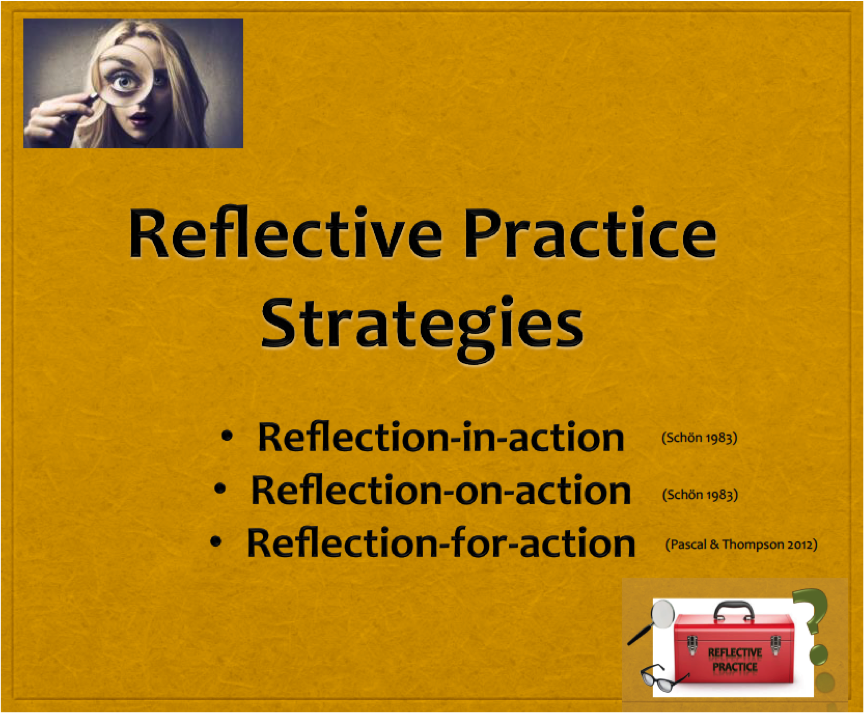
I practice music everyday, and have done for over four decades. As indicated early on in this Project Brief, I have practiced music without the conscious connection to motive or self. This is a great example of how practitioners, especially sole practitioners who are usually working in isolation without the possibility of input from other organisational members, can progress on a particular focus of functional music practice without looking outside of their realm. What practitioners require is a regular opportunity to stop and consider their everyday actions and processes. As Lawrence-Wilkes & Chapman (2015) state, “reflective practice provides an opportunity to enhance professional performance and self-development by enabling insight and assisting learning for new understanding, knowledge and action”. As a multi-method practice-led approach, I will draw on and apply multiple approaches of reflective practice across the two-year full-time research study, in both Project 1 and 2. I will look to the approaches of: Schon (1983); Brookfield (1995); Brookfield (2002); Lyons (2010); Pascal and Thompson (2012); Archer (2007), Archer (2010), Ryan (2014), Griffiths (2010), and Finlay (2008) for insight regarding this practice. At this time, I am considering commencing with two art’s based discussions of reflective practice, and three non-art’s based reflective practice authors. Ryan’s (2014) approach as outlined in “Reflective Practice in the Arts”. Whilst not music practice specific, she talks about performative practice which applies very well to music practice. Additionally, Ryan draws heavily on Archer, a considered expert in the area of reflective practice. Secondly, the work of Griffiths’ discusses the researcher self, which has obvious parallels with my research study of the practitioner self (2010). Both authors discuss a mixed method of reflective practice and reflexive practice within their arts-based discussions. One of the advantages of a mixed method qualitative research study is that it permits complementary methods, allowing the results or findings of one method to shape the subsequent steps in the research process (Robson 1993). The other advantage of mixed method qualitative approaches is that it permits triangulations and enhances interpretability of the literature and data collected increasing the validity of the research findings. There will be extensive empirical data gathered as a matter of process, with commentary and reflection regarding the opportunities and challenges of certain workflows and combinations of the elements of music practice. The three non-art’s based authors I will draw on are: Schon’s (1983) “Reflection-in-action” and “Reflection-on-Action”; Pascal and Thompson’s (2012) “Reflection-for-action”; and Lyon’s (2010) Reflective Journal toolkit questions.
reflection-in-on-for-action
Figure II – Reflective Practices Summary (Anderson et al 2015)
In my Doctoral Research Project 1 I will vary the combinations of the six elements as noted above – self, motivation, musical style, technology, workflows, or creative location – across the 5 original compositions and productions. In order for the study to have merit, these combinations will need to be detailed, along and other data recorded progressively, at any point in time. Data observations could be: what conditions exist in terms of the six elements; what options in terms of the stages of cultural production are available; what decisions are made; what workflow results; and what outcome is achieved. In order to record the details of my practice – my findings, descriptions or reflections of my experience or processes – planned mediums to record are to be: written journals, mindmaps, blogs, audio recordings, video recordings or blogs, prose, lyrics, doodles, graphics and images. As noted previously, I expect I will be experimenting in Project 1 to determine what mediums work effectively in my context, with my workflow, at any particular point in time. Then, at regular intervals, I have scheduled (see proposed project plan and visual timeline in the section below) critical reflective practice stops – planned sessions to stop my practice and consider my practice, and where appropriate, the cultural artefact, critically. I will consider the relationship of the six elements during my practice of cultural production, maintaining a range of mediums of all observations and distinctions made [see Appendix IV (Page 2015c)].
Of particular note will be data elicited regarding a creative practitioner performing the dual role of both practitioner and researcher, and the implications this has on the music practice workflow. In a world with a developing DIY intent, it will broaden discussion in the field of social and cultural studies by providing both data and narrative for dual primary role-based (subject and researcher) formal research studies. It is critical that I demonstrate academic virtue, rigour and transparency of researcher as subject to avoid bias. As a researcher, I subscribe to Griffith’s view that irrespective of what research methodologies one utilises – quantitative, qualitative ethnographic or auto-ethnographic – the researcher must illuminate their “relationships, circumstances, perspectives and reactions”, making these clear to the reader (Griffiths 2011, 184). One way of addressing the separation of the self, is to ensure there are a diverse range of reflective devices and mediums in order to capture the data, so that these mixed-methods can then be used to distil the true data about my self and processes, in order to crystalize the outcomes and conclusions. It is a goal of mine to showcase the benefits and merits of such a qualitative study, particularly within a creative arts field, and therefore to have demonstrated academic virtue (Bridges 2003 in Griffiths, 2011, 183), be considered to have rigour, and guarded against bias, is a primary goal of mine for this Doctorate of Creative Industries research study.
onion-layers
This blog series is planned to continue next month with Doctoral Research Study – Part 2i (Page 2015d). It is intended for this blog series to continue on a regular basis as I progress through my doctoral research project.
References
Anderson, C, Carolyn Carattini, Heather Clarke, Gail Hewton, David Page 2015 QUT KKP623 Reflective Practice in Action Group Presentation submission Accessed October 24, 2015.
Archer, Margaret S. 2010. Conversations about reflexivity, Ontological Explorations. New York: Routledge.
Archer, Margaret S. 2007. Making our way through the world: human reflexivity and social mobility. Cambridge: Cambridge University Press.
Blom, Diana, Dawn Bennett and David Wright. 2011. “How artists working in academia view artistic practice as research: Implications for tertiary music education.” International Journal of Music Education: 0255761411421088.
Brookfield, Stephen D. 2002. Using the lenses of critically reflective teaching in the community college classroom. New Directions for Community Colleges 2002 (118): 31-38.
Brookfield, Stephen D. 1995. Becoming a critically reflective teacher. San Francisco: Jossey Bass.
Burrell, Gibson and Gareth Morgan. 1992. Sociological paradigms and organisational analysis: elements of the sociology of corporate life. Aldershot, Hants: Ashgate.
De Carvalho, Alice Tomaz. 2012. The discourse of home recording: authority of pros and the sovereignty of big studios. Journal of the Art of Record Production 7.
Ellis, Carolyn. 1997. Evocative autoethnography: Writing emotionally about our lives. Communication Faculty Publications Paper 304.
Ellis, Carolyn S and Arthur Bochner. 2000. Autoethnography, personal narrative, reflexivity: researcher as subject. In The Handbook of Qualitative Rsearch, edited by Norman Denzin and Yvonna Lincoln, 733-768. New York: Sage.
Finlay, Linda. 2008. Reflecting on reflective practice. Practice-based Professional Learning Centre paper 52 29 (August 12th, 2015). www.open.ac.uk/pbpl.
Franz, Jill M. 2010. Arts-based research. Researching Practice: A Discourse on Qualitative Methodologies 2: 217-226.
Grace, S and R Ajjawi. 2010. Phenomenological research: Understanding human phenomena. Researcing practice: A discussion on qualitative methodologies. Rotterdam: Sense.
Griffiths, Morweena. 2010. Research and the self. In The Routledge companion to research in the arts, edited by M Biggs and H Karlsson, 167-185. London: Routledge.
Lawrence-Wilkes, L and A Chapman. 2015. Reflective Practice. Accessed June 2, 2015. http://www.businessballs.com/reflective-practice.htm.
Lyons, N. 2010. Handbook of reflection and reflective inquiry: mapping a way of knowing for professional reflective inquiry. Vol. 1 New York: Springer.
Mykhalovsky, Eric. 1996. Reconsidering Table Talk. Qualitative Sociology 19 (1).
Onion image courtesy of: Onion Layers Accessed 15th December, 2014
Pace, Steven. 2012. Writing the self into research using grounded theory analytic strategies in auto ethnography. TEXT Special Issue Website Series 13.
Page, David L. 2015d. Doctoral Research Study – Part 2i.  Accessed 20th October, 2015
Page, David 2015c QUT KKP603 Project Development in the Creative Industries submission  Accessed 10th June, 2016.
Page, David L. 2015b Research Study Approach image courtesy of David L Page Created 4th August, 2015
Page, David L. 2015a. Doctoral Research Study – Part 2g  Accessed 29th July, 2015
Page, David L. 2014 image courtesy of David L Page  Created 15th December, 2014
Pascal, J and N Thompson. 2012. Developing critically reflective practice. Reflective Practice: International and Multidisciplinary Perspectives 13(2) 311-325. Accessed June 12, 2015. doi: 10.1080/14623943.2012.657795.
Robson, C. 1993. Real world research. Oxford: Blackwell.
Ryan, Mary Elizabeth. 2014. Reflective practice in the arts. In Literacy in the Arts, edited by G Barton, 77-90. London: Springer.
Schön, Donald A. 1983. The reflective practitioner: how professionals think in action. Aldershot, England: Arena.
Wright, David George, Dawn Bennett and Diana Blom. 2010. The interface between arts practice and research: attitudes and perceptions of Australian artist‐academics. Higher Education Research & Development 29 (4): 461-473.
QUT image courtesy of:  Queensland University of Technology   Accessed 4th September 2015
– ©David L Page 5/09/2015
– updated ©David L Page 20/10/2015
– updated ©David L Page 10/06/2016
Copyright: No aspect of the content of this blog or blog site is to be reprinted or used within any practice without strict permission directly from David L Page.

SaveSave

SaveSave

SaveSaveSaveSave

SaveSave

SaveSave

SaveSave

SaveSave

SaveSave

SaveSave

SaveSave

History Music Production Part 5b – DIY Culture & Music

This blog is a continuation of a series. See here (Page 2015a) for the previous blog.

(Musical Styles/Genre 2016)

Musical styles (Genre) studies exemplifying changing practice in music production

I provide some examples of contemporary DIY music production practitioners, chosen because of the following: their presence in public mediums; are considered a source of information and influence to the wider music production field; are practitioners who have rejected traditional recording practice, in favour of DIY Music Production practice; and have exhibited characteristics of DIY culture. Due to the diversity of the contemporary DIY music production practitioner and their musical style (genre) interests, I have included examples from three contrasting musical styles (genres): indie rock, electronic music production, and hybrid musical styles.

1. Musical style (Genre) Study A: Music production practices in indie rock

Dandy Warhols and Tame Impala

 (Dandy-Warhols 2012)                            (Tame Impala 2012a)
Similar to a few artists since the 1950’s (Burgess 2014, 52-53; Emerick and Massey 2006, 306; Burgess 2014, 93), Dandy Warhol’s were signed to a record label, achieved commercial success, completed their record company contractual obligations, and rejected traditional production practice to self-produce. They procured physical space, carried out DIY renovations, and improvised production using assorted technology[1] (Davie 2012, 46-50; Dandy Warhols 2010). Total oversight provided flexibility, allowing choice of technology choice, how it was to be applied, and to what standards they aspired to – commercial, technical, creative, affective or social. “The rise of more affordable digital recording rigs and easier programming protocols represents a democratisation of technology, making available a process that was once accessible only through the facilities and skills provided by a recording studio” (Leyshon 2009,1309). Musician, songwriter, producer Kevin Parker {aka Tame Impala} – a contemporary DIY music production practitioner with commercial, creative and affective practice motives, has “total disregard for convention”. Similar to the Dandy Warhols, Parker prefers to experiment, producing Tame Impala’s 2012b “Lonerism” in a rented apartment with a range of technology of varying quality. Not necessarily following efficient practice, Parker’s openly disregards accepted technical processes and standards. The album received critical acclaim, described as “cosmic mangling of sound and makeshift technique”. Parker’s production and post-production skills “are sought-after by like-minded artists”: artists, who no doubt, aspire to non-convention and preparedness to deviate from accepted industry standards (Davie 2012, 44-45; Tame Impala. 2012b).

2.Musical style (Genre) Study B: Music production practices in electronic music production

Danger Mouse and Goyte

           (Danger Mouse 2004)                         (Goyte 2011a)
Brian Burton {aka Danger Mouse[2]} experimented with the sampling process of the day[3] by fusing two well-known albums[4], and shared it with his local community. Connecting to his creative, affective and social practice motives, the community responded, shared it online with the broader community, attracting the attention of the US authorities for Danger Mouse’s breach of copyright[5] (Gunderson 2004). Much conversation and debate ensured, attracting more attention, and his ‘remix’ went ‘viral’. Danger Mouse’s name became infamous to both consumers and music industry establishment as a production talent (Johnsen et al 2007; Väkevä 2010, 61-66). Affirming the ‘possibilities’ of DIY, the ‘event’ influenced aspiring practitioners, inspiring them to similar innovative and creative acts in their attempt to gain notoriety, and “stand out in the crowd” (Hracs et al. 2013, 1144, 1149). Building on his prior releases, Danger Mouse experienced a rapid rise to fame and respect as a production practitioner (Davie 2014, 38; Duckworth 2005, 148). Similarly, DIY Wally de Backer {aka Goyte} wanted to build upon his prior releases and explore a new level of creative and affective practice for his third album by incorporating original acoustic samples into the process[6]. Recording samples in his project studio using a range of technologies[7], Goyte created a range of virtual instruments, able to be played in unique ways that the original acoustic instruments could not have[8]. By “virtualizing the instrument this way”, Goyte was able to create sonic qualities or textures not previously heard. The production received critical acclaim and awards worldwide (Goyte 2011c; Goyte 2011b). Additionally, as a prosumer Goyte used technology as he desired, choosing to record below high-fidelity standards (Davie 2015, 34): “some songs I sang into the microphone of the MacBookPro – for whatever reason it sounded really good in that room and I left it in the final mix” (Holder 2011). Today’s developed technology allows music producers “a significant degree of creative freedom”, to “produce highly accomplished soundtracks”, of a standard where “some of these tracks … can literally be sent straight to the record company for final mastering” (Hewitt 2008, xv). The portable studio has enabled a new environment for DIY production (Huber and Runstein 2014, 78).

3. Musical style (Genre) Study C: Hybrid music production practice

Brian Eno & Trent Reznor

(Brian Eno 1984a)                            (Nine Inch Nails 2008a)
Early in his career, Eno recognized a fundamental difference between live performance and studio practice in the way music moved from a “transient and ephemeral experience, to one that could be replayed as many times as one had access to the recording” (2004, 127). Having multiple listening opportunities with recorded productions allowed the brain to hear different elements and dimensions of the composed music, each time a track is listened to. Approaching the “studio as an instrument in order to create new sonic worlds”, Eno focussed on creating multi-dimensional sonic and textural narratives, to entertain the listener and to hold the consumer’s attention each time they revisited that particular track (2004,127). Rejecting traditions of music and audio industry training and standards, Eno commenced self-producing music reflecting his creative and affective desires. Creator of the ‘ambient music’ genre (Eno 1984b; Tamm 1995), Eno likens his practice to that of a painter, “working directly with a material, working directly on a substance”. A contemporary practitioner has exponentially greater options available to them[9], without the need for compositional and instrumental skill and training as required a decade ago (Eno, 2004, 127 -129). Similarly, Reznor rejected traditional production practice early, choosing instead a hybrid approach of analogue and digital working environments to drive Nine Inch Nails’ economic, creative, affective and social practice desires. Using a range of instruments, sonic qualities and textures and workflows from diverse genres, he created ‘industrial rock’ (Nine Inch Nails 2008b; Wikström 2013; Anderson 2008; Young and Collins 2010, McIntyre 2012,149). Motivated by a rapidly decentralizing industry, Reznor embraced new opportunities, proactively engaging the consumer, inviting them to interact in the production process (Stone 2009; Väkevä 2010, 61). Reznor‘s acceptance and openness for change allowed for “new forms of artistry” (Väkevä 2010, 59; Anderson 2008). The “relationship between audience, producer, and artist fundamentally changed with the digitalization of music”. Prosumers no longer considered the elements of production and distribution of cultural productions “as separate functions or responsibilities, but as one process” (Miller 2013, 37). Technology enabled and encouraged access to music production for just about anyone. In turn, the contemporary prosumer interacted with the developing technology in creative or experimental ways, differently to their predecessors or how the manufacturers had intended (Tepper and Hargittai 2009, 233). Such misuse of technology, likely to be the result of either disregarding or not knowing what were previously accepted standards, often reveal innovative sonic textures that capture the imagination of peers or consumers, such as the use of Autotune when used by the producers of Cher, and later adopted by T-Pain as a vocal signature (Antares 2015; Neyfakh 2014; Sillitoe 1999). As both Eno and Reznor demonstrated, use of alternative technology or practice {creative, affective, social or effective practice}, derived from development or innovation, influences new genres of music to emerge (Langford 2010, 15). Such creativity and innovation is essential for the health and longevity of the discipline, and irrespective of the status of the practitioner, every one contributes to its development. Creativity and innovation “occurs in the plethora of smaller firms representing a multitude of cultures and subcultures, … where new ideas result from experimentation” (Moran 2011,63): “most of the real business of music production starts at the local level, where creativity blossoms in a myriad of different forms” (Wallis 2001, 11).

Conclusion

Contemporary DIY music production practice has been profoundly influenced with the increasing decentralisation in the audio and music industry since the 1980’s via a range of factors including: the development and adoption of digital recording technologies, and; the exponential influence of global communication networks on music production and consumption practices. Following these factors, DIY perspectives on cultural production have become particularly influential in music production, in many ways redefining the field today. Enabled by these factors, contemporary DIY music production practitioners are and rebellious practitioners with eclectic backgrounds, musical tastes and skill levels. They are likely motivated by creative, affective or social practice, rather than effective practice, making aesthetic choices over technical ‘standards’, and working in what could be considered ineffective or inefficient workflows. They are more likely to be passionate hobbyists, who want to create, express and be heard, using project or portable technology as either a studio or an instrument, probably in a way that was not originally intended by the manufacturer, and yet creating unique sonic qualities or textures, influencing new genres to emerge.
Due to the relative immaturity of the discipline, the diverse and eclectic nature of the contemporary DIY Music Production practitioner, and the shortage of detailed information describing process, an opportunity exists for a discipline endorsed research study into the practices of a range of contemporary DIY music production practitioners. This should be conducted with the goal of developing accepted standards and a model of contemporary DIY music production ‘best practice’ principles, to offer genuine guidance and support to contemporary DIY music production practitioners in the pursuit of their practice, irrespective of their motivation, or combination of motivations, for creative, affective, effective or social practice.
Footnotes
[1] The Dandy Warhols use an eclectic assortment of analogue, digital and virtual equipment, in addition to just about any device that they can see a possibility of creating new and interesting sonic qualities or textures (Davie 2012, 46-50).
[2] Danger Mouse is an example of a contemporary DIY music production practitioner, who commenced as an acoustic musician (Burton is an accomplished drummer), and then found a ‘voice’ in the DIY world of self-production within his bedroom project studio (Davie 2014, 38-43). Danger Mouse “had already released four CD mixes” prior to the ‘Grey Album’ event (Gunderson 2004; Danger Mouse 2004)
[3] Known as Remixing, this aesthetic practice commenced in an early form in the late 1970s when dance venues started to gain popularity. Initially, DJs used two turntables to play the danceable sections of different songs, omitting the less danceable parts of songs, by alternating the album and track they were playing. Artists then saw an opportunity to have their songs extended’ for the dance market, by re-recording a dance version, altering the structure of the song[3], in order for it to be more conducive to dance venues. This then led to the development of a dance genre. With the development of digital technologies and portable tape machines, DJ’s took the dance idea, and started using a selection of well-known samples from previous hit records[see footnote 3], in a very repetitive way. Known as sampling, it has continued to develop exponentially, especially as technologies developed to include virtual technologies. What was once restricted to DJ’s syncing abilities, record companies, and via tape playing devices, could now be done easily within a virtual digital audio workstation (DAW). The technology was now whatever a practitioner wanted it to be: in its original intended use as a multi-track recorder, or; as a studio; or, as an instrument. Such diversity of use enabled the proliferation of the genre: remixing. Essentially mixing, or blending two released tracks together, required little to no instrument skill, just a ‘feel’ for what sounded good to them. Access to technology now allowed practitioners to pursue ‘affective practice’, following their emotion, allowing their creativity to produce anything they could dream or imagine. Universal in moving people to engage with music is the emotional aspect (Bennett 2005, 117; Hodges and Sebald 2011, 68).
[4] Known as the “Grey album”, it was an innovative fusion of the Beatles’ “White Album” and Jay-Z’s “Black Album” (Davie 2014, 34; Danger Mouse 2004).
[5] Danger Mouse, demonstrating characteristics synonymous with DIY culture, had not sought the owners permission before he attempted his remix, and then supplied it publically. The fact that it was not sold, and Danger Mouse nor his friends stood to make no income out of the sharing of the product meant that in theory he was not breaching copyright (Gunderson 2004).
[6] Goyte had made his first two albums using samples from prepared sample libraries. For his third album, Goyte wanted to record acoustic samples to use within his digital instruments, effectively creating unique instruments (Goyte 2011c).
[7] Goyte used both a MacBookPro and a multi-track reel to reel recorder (Goyte 2011c).
[8] Goyte used innovative processing techniques to create a range of virtual instruments, played in ways that the original acoustic instruments could not have – rhythmically, harmonically and even melodically (Goyte 2011c).
[9] Greater music production options, in terms of diverse sample libraries and both digital and virtual instruments that can bend, morph, twist, transpose, delay, or reverse any original signal that is fed into it.
This blog will continue next month. It is intended for this blog series to continue on a regular basis as I progress through my doctoral research project.


References
Anderson, Nate. 2008. “Reznor makes $750,000 even when the music is free.” Accessed May 20, 2015. http://arstechnica.com/uncategorized/2008/03/reznor-makes-750000-even-whenthe-music-is-free.
Antares. 2015. “Auto-tune.” Accessed 7th May, 2015. http://www.antarestech.com.
Bennett, Andy. 2005. Culture and everyday life. New York, NY: Routledge.
Burgess, Richard James. 2014. The history of music production. New York: Oxford University Press.
Dandy Warhols, The. 2010. The Dandy Warhols: best of the capitol years 1995-2007. Capitol Records. Compact Disc.
Dandy Warhols. 2012. This Machine image courtesy of Discogs Accessed 28th August, 2015.
Danger Mouse. 2004. The Grey Album image courtesy of Discogs Accessed 28th August, 2015.
Davie, Mark. 2015. “DIY: don’t be a tool.” Audio Technology 2015 (106): 98.
Davie, Mark. 2014. “Danger Mouse: producer of the decade.” Audio Technology (100): 98.
Davie, Mark. 2012. “The diy revolution.” Audio Technology (91): 98.
Duckworth, William. 2005. Virtual music: How the web got wired for sound. New York, NY: Routledge.
Emerick, Geoff and Howard Massey. 2007. Here, there and everywhere: my life recording the music of the beatles. New York, NY: Gotham Books.
Eno, Brian. 2004. “The studio as compositional tool.” In Audio culture: readings in modern music, edited by Christoph Cox and Daniel Warner, 127-130. New York: Continuum.
Eno, Brian. 1984b. Ambient 4: on land. Editions EG. Compact Disc.
Eno, Brian. 1984a. Ambient 4: on land. image courtesy of Discogs Accessed 28th August, 2015.
Gotye. 2011c. “Making, making mirrors – a short documentary.” Accessed 5th May, 2015. https://www.youtube.com/watch?v=2ZXLyeatI0s&list=PL2qcTIIqLo7WEHIeJ0s2Y21jgIKoQahkD&index=64.
Goyte. 2011b. Making Mirrors. Eleven May 5, 2015. Compact Disc
Goyte. 2011a. Making Mirrors image courtesy of Discogs Accessed 28th August, 2015.
Gunderson, Philip A. 2004. “Danger Mouse’s “grey album”, mash-ups, and the age of composition.” Postmodern Culture 15 (1): 7.
Hewitt, Michael. 2008. Music theory for computer musicians. Boston: Cengage Learning Course Technology.
Hodges, Donald A and David C Sebald. 2011. Music in the human experience: an introduction to music psychology. New York: Routledge
Holder, Christopher. 2011. “Goyte.” Audio Technology (84): 98.
Hracs, Brian J, Doreen Jakob and Atle Hauge. 2013. “Standing out in the crowd: the rise of exclusivity-based strategies to compete in the contemporary marketplace for music and fashion.” Environment and Planning A 45 (5): 1144-1161.
Huber, David Miles and Robert E Runstein. 2014. Modern recording techniques. 8th ed. Burlington: Focal Press.
Johnsen, Andreas , Ralf Christensen and Henrik Moltke. 2007. “Good Copy, Bad Copy.” Copyright and Culture Documentary. Accessed June 7, 2015. https://www.youtube.com/watch?v=WEKl5I_Q044&list=PL2qcTIIqLo7WEHIeJ0s2Y21jgIKoQahkD&index=72.
Langford, Simon. 2010. Remix manual. Burlington: Focal Press.
Leyshon, Andrew. 2009. “The Software slump?: digital music, the democratisation of technology, and the decline of the recording studio sector within the musical economy.” Environment and Planning 41 (6): 1309.
McIntyre, Phillip. 2012. “Rethinking creativity: record production and the systems model.” In The art of record production: an introductory reader for a new academic field, 149-62. Farnham, Surrey: Ashgate.
Miller, Eric R. 2013. “The influence of recording technology on music performance and production.” Bachelor of Science in Media Arts and Studies, Media Arts and Studies, Ohio University.
Moran, Ian P. 2011. “Punk: the do-it-yourself subculture.” Social Sciences Journal 10 (1): 13.
Musical Styles/Genre 2016 image courtesy of: Musical Styles Accessed 15th December, 2016
Neyfakh, Leon. 2014. “The Sadness of T-Pain.” Accessed 7th June, 2015. http://www.newyorker.com/culture/culture-desk/the-sadness-of-t-pain.
Nine Inch Nails. 2008b. Ghosts I-IV. Shock Records. Compact Disc.
Nine Inch Nails. 2008. Ghosts I-IV image courtesy of Discogs Accessed 28th August, 2015.
Onion image courtesy of: Onion Layers Accessed 15th December, 2014
Page, David L. 2015b  What Brought Me Here #10 – Eno  Accessed 28th August, 2015.
Page, David L. 2015a. History of Music Production Part 5a – the DIY music-making practitioner  Accessed 5th August, 2015
Sillitoe, Sue. 1999. “Recording Cher’s “Believe”.” Accessed 7th June, 2015. http://www.soundonsound.com/sos/feb99/articles/tracks661.htm.
Stone, Brad. 2009. “Artists find backers as labels wane.” Accessed 7th June, 2015. http://www.nytimes.com/2009/07/22/technology/internet/22music.html?_r=0.
Tame Impala. 2012b. Lonerism. Modular. Compact Disc.
Tame Impala. 2012a. Lonerism image courtesy of Discogs Accessed 28th August, 2015.
Tamm, Eric. 1995. Brian Eno: his music and the vertical color of sound. New York, NY: Da Capo Press.
Tepper, Steven J. and Eszter Hargittai. 2009. “Pathways to music exploration in a digital age.” Poetics 37 (3): 227-249.
Väkevä, Lauri. 2010. “Garage band or GarageBand®? Remixing musical futures.” British Journal of Music Education 27 (01): 59-70.
Wallis, R Dr. 2001. “Best practice cases in the music industry and their relevance for government policies in developing countries.” Paper presented at the United Conference on Trade and Development, Brussels, Belgium, May 14-20, 2001.
Wikström, Patrik. 2013. The music industry: music in the cloud, Digital media and society series. Cambridge: Polity.
Young, Sherman and Steve Collins. 2010. “A View from the Trenches of Music 2.0.” Popular Music and Society 33 (3): 339-355.
– ©David L Page 28/08/2015
– ©David L Page 15/12/2016
Copyright: No aspect of the content of this blog or blog site is to be reprinted or used within any practice without strict permission directly from David L Page.

SaveSave

SaveSaveSaveSave

SaveSaveSaveSave

SaveSaveSaveSave

SaveSave

SaveSaveSaveSave

SaveSave

SaveSave

Effective and best practice for the contemporary music practitioner

Pro Tools 11screenshot

Standards of effective practice have played an important part in the audio industry, even though these may be challenged by DIY culture and practices. Historically, the music and audio industry’s standards have addressed commercial and technical criteria. In commercial terms a “successful record producer is, by definition, someone who has had multiple hits” (Burgess 1997, 162; Grammy Awards 2015), while technical standards have been formulated through industry bodies such as The Audio Engineering Society (Gibson 2006, 42) and more recently, the Recording Producers and Engineers Wing (2008).

Historical development of practice

The Audio Engineering Society {AES} was formed in 1948 in New York as a governing body, and to offer industry expertise to the developing recording and broadcast industry (AES 2015). A significant outcome of the AES was the creation of standards for which the industry could operate, and that manufacturers of any recording and broadcast industry equipment could comply with. This was very beneficial as the development of certain equipment such as microphones were being constructed with a variety of unique fittings that meant that microphones were not universal, requiring different microphone cables for each manufacturer’s device. The AES was instrumental in influencing a universal standard over time (AES 2015; Huber and Runstein 2010, 111-179). However, the majority of standards developed, were technical or theoretical to audio engineering, not process or workflow-based for the more global discipline of music production (AES 2015). As access was limited to recording studios up until the 1980’s, such music production process or workflow remained to those in the one of the specific skilled roles previously referred to, or as an artist. Practice was aligned to the typical corporate organisational effectiveness objectives, to maximise profitability. Music production practice was controlled by the management of the commercial radio and television studios or the recording studios; the skilled scientists, technicians or manufacturers creating the technology or the processes, with the focus on ‘correct’ use and application of technology, inline with the studio management’s directives of conservatism to preserve the organisational objectives; or the music producers who had successfully produced recordings for artists, contracted to abide by management’s directives to meet the organisational objectives (Robbins et al 2009, 708-710; Burgess 2014, 38-41, 42-55, 82-97; Emerick and Massey 2007, 54).
As technology developed and music production related equipment became available to the prosumer market, user manuals provided by the manufacturer instructing the user how they were best to use the unit was one of the few mediums of effective practice being made available outside of the professional studio environment[1]. One of the first units with such a user manual was for the TASCAM series 144 model Portastudio user manual (TEAC 1979).  A decade later, the first industry functional text, sponsored by one of the major manufacturers on the sector was released. Initiated by two audio engineers, arranging sponsorship from the Yamaha Music Corporation to be able to write it, the “Yamaha-The Sound Reinforcement Handbook” was at the time the only comprehensive audio engineering textbook of its kind, and instantly became a standard reference book to the industry (Davis & Jones 1990). The text remained for more than a decade as the only text book comprehensively, outlining audio engineering theory and techniques for ‘sound reinforcement’[2]. The third service and support more recently provided for budding DIY music producers is a range of instructional courses, vocational courses such as the likes of the Australian-based SAE, the School of Audio Engineering (2015), and JMC Academy (2015). In order to teach subject content, audio engineers with studio experience had to be employed to teach the industry standard practices. Whilst it may have taken some decades for this process to become refined and consistent, Burgess confirms their relevance in the discipline: “combined with a proactive DIY approach, a good school program can fill in knowledge gaps and instill a deeper understanding of the fundamentals while increasing awareness of best practices” (Burgess 2013, 35).
The industry to date has only a few disparate best practice documents such as The Recording Producers and Engineers Wing (2008) “Digital Audio Workstation Guidelines for Music Production” advice but it does not comprehensively cover contemporary music production practice. The industry has progressed from the traditional music production model, where exemplars existed across the different roles and skills. However, now within the decentralized music production era, the disparate roles across the music production process tend to be fused and completed by the one person, the contemporary DIY music producer. Music production practitioners have access to a large range of ancillary services and products, such industry trade magazines, texts, forums and blogs. Audio industry magazines such as “Sound on Sound” and “Audio Technology” are recognized as reputable magazines within the audio industry and music production discipline. But do they truly reflect the contemporary music production practice, or are their roots from the traditional music production model causing a widening gap of relevance? Alternative press options such as “Computer Music” (2015) and “MusicTech Focus” magazines have their origins in the development of digital technology. But do their roots limit their relevance by not including the more creative and musical requirements of the contemporary music production practice? Other alternative press includes “Wire”, which focuses more on the cultural and aesthetic aspects of music culture and practice. There is a vast range of support for music practitioners in the form of forums and blogs, with some of these operated by recognised industry professionals[3]. However, many of these are run by hobbyists with well intentioned advice, whilst others are commercially driven, with some of their marketing tactics, products and advice is at best, questionable.

Current practice

Some scholars refer to the current field of DIY music production as being in transition (Hracs, 2012), although it can also be thought of as a fusion or hybrid of two prior developments: that of traditional large format console studio music production and computer-based sound generation. Irrespective of the definition, twenty-first century contemporary DIY music production illustrates the ways that practitioners have broken with previously accepted industry practices, with consensus about effective or best practice now difficult to identify, or indeed where the idea of best practice has been actively challenged through social and cultural changes in the practices of cultural production. As such, the discipline of contemporary DIY music production lacks the infrastructure of an established and mature industry where consensus of what effective practice is, might be found.
target
The notion of effective practice [4] originated in business centred on notions of effectiveness, efficiency, and productivity (Montana and Charnov 2000,12; Robbins et al 2009, 313; Griffin 1996). In this way, effective practice is a quantifiable measure and assumes the ‘organisation’ or practice has commercial or technical objectives. In contrast, contemporary DIY music production practitioners may not be motivated by either commercial or technical objectives, and therefore effective practice measures may not apply to many practices within the discipline (Rogers 2013, 168). In fact, contemporary DIY music production is a discipline in which notions of effective practice may actually be actively disregarded due to the perception that other motivations such as creativity, emotional connection and free-spiritedness are more important (McWilliam 2008, 38; Davie 2012, 41). As a result, the term best practice is perhaps more appropriate in the discipline of contemporary DIY music production, bringing with it the idea of benchmarking, or “analysing and copying the methods of the leaders” in the field (Robbins et al 2009, 313). However, without accepted discipline standards, and consensus of what best practice is, it makes it difficult, if not impossible, to accurately and effectively benchmark amongst the discipline and its practitioners. Further, if the contemporary DIY music production practice is lacking in organisational characteristics of a mature industry such as robust management processes and procedures, sophisticated vision and strategic planning, then the contemporary DIY music production practitioner is less likely able to measure quality standards should they exist, nor consciously position their practice within the field in order to optimise the chance of success (Robbins et al 2009, 708-710, 716-717).
Note [1]: The manufacturer’s user manual described ‘effective practice’ for the user to operate that unit safely, following a technically correct process
Note [2]: Sound reinforcement is a term used to describe the live audio industry function which still remains today
Note [3]: Pensado’s Place (2015) is operated by Dave Pansado who has had a recognized audio industry career
Note [4] :The notion of effective practice originated in business and post-War Japan, centred on notions of effectiveness (“doing the right thing”), efficiency (the effort exerted in “doing the right thing”), and productivity (the relationship between input and output) (Montana and Charnov 2000, 12; Robbins et al 2009, 313; Griffin 1996).
This blog series is planned to continue next month with Research Practitioner Part 2.
References
AES. 2015. “Audio Engineering Society (AES) History.” Accessed  May 3,2015
Audio Technology Magazine. 2015 http://www.audiotechnology.com.au Accessed August 15, 2015
Burgess, Richard James. 2014. The history of music production. New York: Oxford University Press.
Burgess, Richard James. 1997. The art of record production. London: Omnibus Press.
Computer Music. 2015. http://www.musicradar.com/computermusic Accessed August 15, 2015
Davie, Mark. 2012. “The diy revolution.” Audio Technology (91): 98.
Davis, Gary and Ralph Jones. 1990. Yamaha-The Sound Reinforcement Handbook. Milwaukee: Hal Leonard Publishing Corporation.
Emerick, Geoff and Howard Massey. 2007. Here, there and everywhere: my life recording the music of the beatles. New York, NY: Gotham Books.
Gibson, Bill. 2006. The s.m.a.r.t. guide to becoming a successful producer/engineer Boston: Thompson Course Technology.
Grammy Awards. 2015. “The 2015 Grammy Awards.” Accessed May 20, 2015. https://www.grammy.com/nominees.
Griffin, RW. 1996. Management. 5th ed. Boston: Houghton Mifflin Company.
Hracs, Brian J. 2012. “A creative industry in transition: the rise of digitally driven independent music production.” Growth and Change 43 (3): 442-461.
Huber, David Miles and Robert E Runstein. 2014. Modern recording techniques. 8th ed. Burlington: Focal Press.
JMC Academy. 2015 http://www.jmcacademy.edu.au/?gclid=CN636-HnmcsCFQGbvAod7GoMDQ  Accessed August 15, 2015
McWilliam, Erica. 2008. The creative workforce: how to launch young people into high-flying futures. Sydney: UNSW press.
Montana, Patrick J and Bruce H Charnov. 2000. Management. 3rd ed. Vol. 333, Business Review Books. New York: Barron’s Educational Series.
MusicTech. 2015. http://www.musictech.net Accessed August 15, 2015
Recording Producers and Engineers Wing, The. 2008. “Digital Audio Workstation Guidelines for Music Production.” Accessed May 27, 2015. https://www.grammy.org/files/pages/DAWGuidelineLong.
Robbins, Stephen, Rolf Bergman, ID Stagg and Mary Coulter. 2009. Management 5. Sydney: Pearson Education Australia.
Rogers, I. 2013. “The hobbyist majority and the mainstream fringe: the pathways of independent music-making in Brisbane, Australia.” In Redefining mainstream popular music, edited by Sarah Baker, Andy Bennett and Jodie Taylor, 162-173. New York: Routledge.
SAE. 2015. “SAE Institute.” https://sae.edu.au/ Accessed August 15, 2015
Sound on Sound. 2015 http://www.soundonsound.com Accessed August 15, 2015
Target image courtesy of: http://www.clipartpanda.com/clipart_images/target-skills-53658831 Accessed 15th August, 2015
TEAC. 1979. “TEAC Tascam series: model 144 Portastudio manual”, edited by TEAC Inc. www.tascam.com: TEAC Inc.
Wire. 2015. http://www.thewire.co.uk Accessed August 15, 2015
– ©David L Page 16/08/2015
Copyright: No aspect of the content of this blog or blog site is to be reprinted or used within any practice without strict permission directly from David L Page.

SaveSave

SaveSave

SaveSave

History Music Production Part 5a – The DIY music-making practitioner

This blog is a continuation of a series. See here (Page 2015a) for the previous blog.

Following substantial technological development from the late 1960s to today, music practice has diversified exponentially in a variety of social and cultural contexts (Wallis 2001; Watson and Shove 2008). Limited access to major corporate record label and broadcasting studios in the 1970’s and 1980’s aligned with the broader social and cultural developments of DIY culture from the 1970s, and with the ever-increasing available range of technology. This enabled the process of music creation and production to exponentially develop, with musicians in the new era of project and portable studios, emerging as a new generation of music practitioners (Theberge 1997, P3; Hracs 2012). Increased access to digital recording and production technology has enabled aspiring music practitioners from diverse backgrounds and interests to participate in a do-it-yourself (DIY) capacity, resulting in a significantly more fragmented industry (Kuznetsov and Paulos 2010; Spencer 2005; Moran 2011; Watson 2014). Wallis (2001, 13) observed that practitioners’ access to user-friendly technology has “resulted in many creative artistic talents achieving a high degree of IT literacy, leading to an even broader market”. Music production technology is now accessible to most people who has any degree of interest in music practice, irrespective of their social status or professional role, their musical or sonic training or experience, or the social and cultural context. This enables a truly diverse and eclectic music practice society (Burgess 1997, 34; Rogers 2013). Practitioners now access and use broad range of music production and instrument technology, have vastly different workflows, for a broader range of music styles, and use a range of creative locations to create their EP’s. This diversity of practice now exemplifies contemporary industry (Ritzer and Jurgenson 2010; Purdue et al. 1997). As a result, recorded music is now created in ways that contrast with previous models, where cultural products resulted from established industrial hierarchies and imperatives (Burgess 1997).
AE Project Studio
(MIDAS 2014)
Multiple options to play and produce music have implications on what elements of music production are used at any point in time: the creative technologies that can be used, the music style that emerges naturally out or certain technology, the creative location that practice occurs within, and the practice workflow. Further, as practitioners tend to assume all of these creative labour roles in their home-style project studios, contemporary music practitioners continue to extend their knowledge, skill level and technology, in obvious contrast with previous models (Izhaki 2013; Théberge 1997).
(AE Project Studio 2015)
With the fragmentation of the industry, and the attracting diverse peoples in music practice, the contemporary practitioner’s motivations to practice music have also diversified. Rogers’ study highlighted varying orientations of motive amongst participants: professional, semi-professional, emerging and several non-commercial aspirational levels – including amateur or hobbyist practices. By far, the largest group was the amateur category (2013, 168). The term amateur is adopted “not as a reflection on a hobbyists’ skills, which are often quite advanced, but rather, to emphasise that most of DIY culture is not motivated by commercial purposes” (Kuznetson and Paulos 2010, 295). The “status and position of the amateur have been redeemed and a new, less aristocratic, breed of amateur has emerged .. (who) .. are technologically literate, seriously engaged, and committed practitioners” (Prior 2010, 401).
With DIY perspectives on cultural production being particularly influential in music practice, in many ways redefining the field today (Frith 1992; Watson and Shove 2008; Watson 2014; Ritzer and Jurgenson 2010; Purdue et al. 1997), traditional standards of practice are now being challenged. Music industry standards (Burgess 1997, 162; Grammy Awards 2015; Gibson 2006, 42; Recording Producers and Engineers Wing 2008) appear to be less valued by DIY music practitioners. Notions of effective practice appears to be actively disregarded due to the DIY practitioners prioritizing of motivations such as creativity, emotional connection, networking, and free-spiritedness (Hracs, 2012; Kuznetsov and Paulos 2010). Burgess found contemporary music practitioners are likely to be: self-taught, and of a ‘discoverer’ learning style (2013, 29); with a preparedness to reject accepted industry practice (eg: technical or music style standards); and a willingness to borrow at will any music or sonic characteristics from other cultural approaches to fuse into their practice, leading to “unprecedented diversity” (Rogers 2013, 168; McWilliam 2008, 38; Davie 2012, 41).
With this diversity comes the portability of both production and performance technology. For example; producing a full EP on a beach, only needing to retreat to a location to get some electricity when my laptop battery runs empty; dance festivals in a forest where the artists arrive with as little gear as a laptop, or perhaps a USB stick and perform in front of 1,000 people for up to several hours; or, as a result of the technological developments, a new music style emerges because practitioners use the digital virtual technology as an instrument and performance tool, rather than for what it was originally designed for by the manufacturer {data management} (Hewitt 2008, xv). One of the best examples of this would be the creation of electronic music and its sub-genres of Electronic dance music, trance music and chill music.
It could also be stated that in Electronic Music Production (EMP), musicians and producers generally use portable technology, accessing synthetic or digital instruments, and compose typically in a structured process (Gunderson 2004; Johnsen et al 2007; Davie 2014, 38; Duckworth 2005, 148; Goyte 2011a; Goyte 2011b; Davie 2015, 34; Holder 2011; Huber and Runstein 2013, 78). In contrast, Indie Rock musicians and producers generally use project studios, access acoustic or electric instruments, and quite often compose in an organic process (Emerick and Massey 2006, 306; Burgess 2014, 93; Dandy Warhols 2010; Leyshon 2009, 1309; Davie 2012, 44-45; Tame Impala. 2012).
Unlike the traditional motive of commercial – volume sales – success, the new amateur’s motives are diverse, and yet highly motivated, possessing an impassioned commitment to their practice, with a high level of focus on developing their knowledge, skill level and technology.
onion-layers
This blog will continue next month History Music Production Part 5b – DIY Culture & Music (Page 2015b).
References
AE Project Studio Microphone Case image courtesy of: DLP Pinterest site  Accessed 28th August, 2015
Burgess, Richard James. 2014. The history of music production. New York: Oxford University Press. 
Burgess, Richard James. 2013. The art of music production: the theory and practice. New York: Oxford University Press. 
Burgess, Richard James. 1997. The art of record production. London: Omnibus Press. 
Dandy Warhols, The. 2010. The Dandy Warhols: best of the capitol years 1995-2007. Capitol Records. Compact Disc. 
Davie, Mark. 2015. “DIY: don’t be a tool.” Audio Technology 2015 (106): 98.
Davie, Mark. 2014. “Danger Mouse: producer of the decade.” Audio Technology (100): 98.
Davie, Mark. 2012. “The diy revolution.” Audio Technology (91): 98. 
DIY image courtesy of: DIY Accessed 24th July, 2015
Duckworth, William. 2005. Virtual music: How the web got wired for sound. New York, NY: Routledge.
Emerick, Geoff and Howard Massey. 2007. Here, there and everywhere: my life recording the music of the beatles. New York, NY: Gotham Books.
Frith, Simon. 1992. “The industrialization of popular music.” Popular Music and Communication 2: 49-74. 
Gibson, Bill. 2006. The s.m.a.r.t. guide to becoming a successful producer/engineer Boston: Thompson Course Technology. 
Gotye. 2011 (a). “Making, making mirrors – a short documentary.” Accessed May 5, 2015. https://www.youtube.com/watch?v=2ZXLyeatI0s&list=PL2qcTIIqLo7WEHIeJ0s2Y21jgIKoQahkD&index=64. 
Goyte. 2011(b). Making Mirrors. Eleven May 5, 2015. Compact Disc.
Grammy Awards. 2015. “The 2015 Grammy Awards.” Accessed May 20, 2015. https://www.grammy.com/nominees.
Gunderson, Philip A. 2004. “Danger Mouse’s “grey album”, mash-ups, and the age of composition.” Postmodern Culture 15 (1): 7. 
Hewitt, Michael. 2008. Music theory for computer musicians. Boston: Cengage Learning Course Technology.
Holder, Christopher. 2011. “Goyte.” Audio Technology (84): 98. 
Hracs, Brian J. 2012. “A creative industry in transition: the rise of digitally driven independent music production.” Growth and Change 43 (3): 442-461. 
Huber, David Miles and Robert E Runstein. 2014. Modern recording techniques. 8th ed. Burlington: Focal Press.
Izhaki, Roey. 2013. Mixing audio: concepts, practices and tools. 3rd ed. Oxford: Focal.
Johnsen, Andreas , Ralf Christensen and Henrik Moltke. 2007. “Good Copy, Bad Copy.” Copyright and Culture Documentary. Accessed June 7, 2015. https://www.youtube.com/watch?v=WEKl5I_Q044&list=PL2qcTIIqLo7WEHIeJ0s2Y21jgIKoQahkD&index=72.
Kuznetsov, Stacey and Eric Paulos. 2010. “Rise of the Expert Amateur: DIY Projects, Communities, and Cultures.” In Proceedings of the 6th Nordic Conference on Human-Computer Interaction: Extending Boundaries, Reykjavik, Iceland, October 16-20, 2010, edited, 295-304. http://dl.acm.org/citation.cfm?id=1868914&picked=prox: ACM.
Leyshon, Andrew. 2009. “The Software slump?: digital music, the democratisation of technology, and the decline of the recording studio sector within the musical economy.” Environment and Planning 41 (6): 1309.
McWilliam, Erica. 2008. The creative workforce: how to launch young people into high-flying futures. Sydney: UNSW press.
MIDAS 2014 console image courtesy of AE Project Studio. Accessed 29th June, 2014
Moran, Ian P. 2011. “Punk: the do-it-yourself subculture.” Social Sciences Journal 10 (1): 13.
Onion image courtesy of: Onion Layers Accessed 15th December, 2014
Page, David L. 2015b. History of Music Production Part 5b DIY Culture & Music  Accessed 28th August, 2015
Page, David L. 2015a. History Music Production Part 4d – Digital Project Studios become the platform for contemporary DIY music-making Accessed 24th July, 2015
Prior, Nick. 2010. “The rise of the new amateurs: Popular music, digital technology and the fate of cultural production.” Handbook of cultural sociology. London: Routledge: 398-407. 
Purdue, Derrick, Jörg Dürrschmidt, Peter Jowers and Richard O’Doherty. 1997. “DIY culture and extended milieux: LETS, veggie boxes and festivals.” The Sociological Review 45 (4). 
Recording Producers and Engineers Wing, The. 2008. “Digital Audio Workstation Guidelines for Music Production.” Accessed May 27, 2015. https://www.grammy.org/files/pages/DAWGuidelineLong.
Ritzer, George and Nathan Jurgenson. 2010. “Production, consumption, prosumption: the nature of capitalism in the age of the digital prosumer.” Journal of Consumer Culture 10 (1). 
Rogers, I. 2013. “The hobbyist majority and the mainstream fringe: the pathways of independent music-making in Brisbane, Australia.” In Redefining mainstream popular music, edited by Sarah Baker, Andy Bennett and Jodie Taylor, 162-173. New York: Routledge.
Spencer, Amy. 2005. DIY: The rise of lo-fi culture: Marion Boyars London.
Tame Impala. 2012. Lonerism. Modular. Compact Disc. 
Théberge, Paul. 1997. Any sound you can make: making music/consuming technology. Hanover: University Press of New England. 
Wallis, R Dr. 2001. “Best practice cases in the music industry and their relevance for government policies in developing countries.” Paper presented at the United Conference on Trade and Development, Brussels, Belgium, May 14-20, 2001.
Watson, Allan. 2014. Cultural Production in and Beyond the Recording Studio. New York, NY: Routledge.
Watson, Matthew and Elizabeth Shove. 2008. “Product, Competence, Project and Practice DIY and the dynamics of craft consumption.” Journal of Consumer Culture 8 (1): 69,74.
– ©David L Page 24/07/2015
– updated ©David L Page 05/08/2015
Copyright: No aspect of the content of this blog or blog site is to be reprinted or used within any practice without strict permission directly from David L Page.

SaveSave

SaveSave

SaveSave

SaveSave

SaveSave

SaveSave