
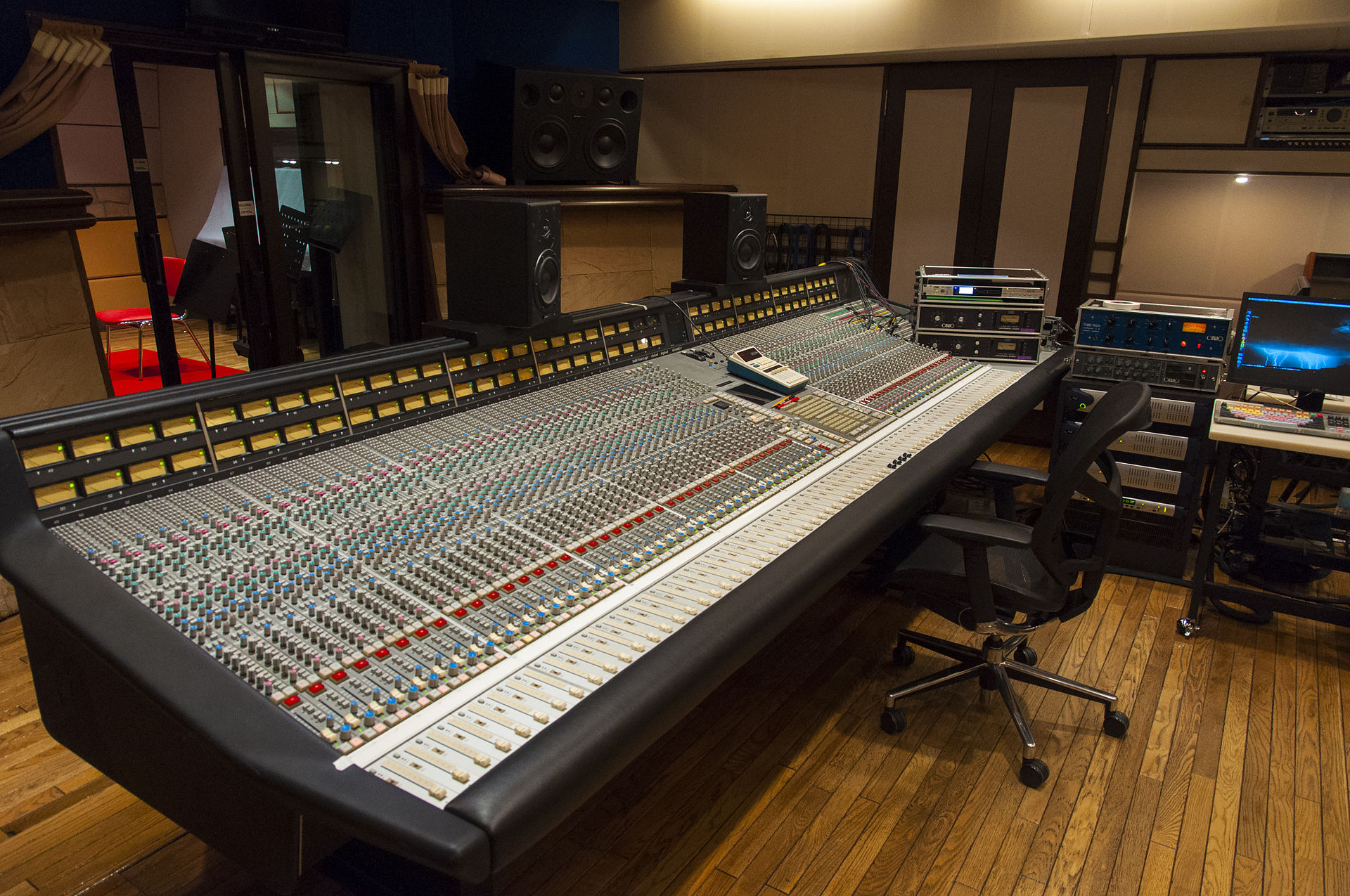
(Solid State Logic SL4064G+ 2010)
This blog post continues a series on Mixing Audio, with MIxing Part 2.
The Mixing Process
Background
As outlined in my Mixing Part 1 (Page, 2010) blog several months ago, lets build upon the introductory line by providing you an overview of a suggested approach to mixing.
My purpose in this blog is to introduce Mixing as a global concept and provide aspiring audio engineers a few quick tips as to how they can approach Mixing in an efficient, effective guided manner.
The Mixing Process
As established in my previous blog, it is the role of the mixing engineer to “take all of the recorded tracks and commit each of them to a final mixdown, in order to realise the pre-agreed qualities of the required end goal – the sum total of these tracks as being part of the cultural production artefact – in a balanced manner. This is the goal – the target – of mixing” (Izhaki in Page 2018).
At this point, I am operating under the assumption that there have been good standards established and completed in terms of the pre-production and the production of the song – the artefact – to date, that you are about to commence to mix.
We also established in the previous blog, the mixing process is both a corrective (technical) process and/or a creative (artistic) process. There is no other reason to engage in the mixing process. We are either fixing something as a result of the pre-production and production process, or embellishing something for aesthetic effect as a ‘producer’.

Holistic Mixing Approach to Establish an Effective Sound Stage
Owsinski (2013) outlines in his text 7 elements as to how to establish an Effective Sound Stage in one’s mix. These are:
0. Prepare DAW Session for Mixing Process
1. Balance (Foundation; Pad; Rhythm; Lead; Fills)
2. Panorama (L-R Breadth via Panning Various Instruments)
3. Frequency (Height of Various Instruments to Allow Clarity)
4. Dimension (Depth of Various Instruments via Reverb, Echo,Delay)
5. Dynamic (Overall Volume Profile of Various Instruments)
6. Interest (Colour + Texture to ‘Hook’ Listener).
As one wanting to establish a series of steps to guide aspiring audio engineers, I have interpreted and refined this process over a number of years, creating what I refer to as the 7 Step Holistic Mixing Approach process (Page, 2014).
But before we proceed, it must be acknowledged that Mixing as a process is a cyclical iterative process: one where one cycles continuously back through the outlined steps in an effort to establish an Effective Sound Stage.
It also must be noted at this point, that the goal of this 7 Step Holistic Mixing Process is merely to establish an effective workflow that aspiring audio engineers can use in their initals stage of development to develop a systematic, thorough approach to their mixing process. Ofcourse, long term, the goal for aspiring audio engineers, as they gain experience, is for them to develop theor own unique effective and efficient, subjective workflow!
7 Step Holistic Mixing Approach to Establish an Effective Sound Stage (Page, 2014)
Step 0
Step 0 equals the preparatory stages of preparing a tracking session ready for mixing. This step involves a sereis of tasks which may appear at first site, ‘obvious’. However, I have observed in many aspiring audio engieers that the ‘obvious’ is often overlooked as its importance is often not fully understood. Therefore, please bear with me as I take your through some of the following ‘obvious’ tasks:
- Listen to the overall mix. What is happening?
- Are there any instruments and frequencies standing out?
- Are there any instruments and frequencies that are clashing?
- Develop an idea of what you want to achieve?
- Develop an idea of how you intend to go about it?
- Order the tracks. Generally, the Mix Audio Processing workflow is:
• deepest Bass Instruments first
• then mid range instruments second,
• the highest Treble Instruments, and then finally
• the ‘lead’ instrument/s
- colour code the tracks
- add markers outlining the form/structure of the artefact (eg: intro, verse 1, chorus, bridge, etc)
- add a Master Fader, and insert an anlysis tool (eg: iZotope’s ‘Insight 2’)
- add comments to any tracks with any notes you feel are relevant.
- establish any likely ‘groups’ you imagine you will require in this mix session.
- establish any likely ‘auxiliary channels’ you imagine you will require in this mix session (eg: drum verb, vox verb, etc).
- commence editing the tracks, comping playlists until have the final versions of the aduio and MIDI tracks that you now want to ‘mix’ together
Step 1
Step 1 involves the balancing of all levels across all tracks, relative to each other. The main device in a DAW for this step are the (digital virtual) ‘console’ faders.
In the step, one must be mindful of the Master fader levels, and establishing good headroom (eg: – 18 dBFS).
Step 2
Step 2 involves establishing a stereo ‘stage’ of where you feel the various sound sources need to be placed. It is generally considered good practice to establish a 3D stereo image (sound stage). The main device in a DAW for this step are the (digital virtual) ‘console’ panorama (aka pan) pots.
NOTE: It is important to note at this stage, the imperativeness of following Steps of 0, 1 and 2 in this order, in order to establish an Effective Sound Stage. Only once one has completed this stage thoroughly, do I encourage aspiring audio engineers to progress to Steps, 3 & 4; and then Steps 5 & 6.
NOTE: Once Steps of 0, 1 and 2 have been completed in this order, Steps, 3 & 4 can be completed in any order.
Step 3
Step 3: Spectral (Frequency EQing, and Filtering)
Step 4
Step 4: Dynamics (Compression, Limiting, Gating, Expanding)
NOTE: Once Steps of 0, 1, 2, 3 and 4 have been completed, Steps, 5 & 6 can be completed in any order.
Step 5
Step 5: Time-Domain (Reverb, Echo, Delay, etc)
Step 6
Step 6: Interest (Sequence, Texture, Colour, Repetition to ‘Hook’ Listener)
The most important step at this point – I believe – is to practice this suggested mix workflow. Please find tracking sessions across a range of musical styles (genres) to practice moving through these steps, from 0 to 6. What I have observed of hundreds of aspiring audio engineers over the past decade period is that one starts to develop confidence, and then a feel for one’s own unique style of mixing approach.
This Mixing series continues with the Mixing Part 6 blog post (Page, 2014).
References
Izhaki, Roey. 2013. Mixing audio: concepts, practices and tools. 3rd ed. Oxford: Focal.
Owsinski, B. 2013 Modern Mixing Techniques, Cengage Learning, Inc USA
Page, David L. 2010. Mixing Part 6 Accessed 14th May, 2014
Page, David L. 2010. Mixing Part 1 Accessed 10th December, 2010
Planetary fusion image courtesy of: Planet Fusion Accessed 8th March, 2010
Target image courtesy of:http://www.clipartpanda.com/clipart_images/target-skills-53658831 Accessed 12th May, 2014
Solid State Logic SL4064G+ image courtesy of: SSL 4064 Accessed 10th December, 2010


